
Introduction
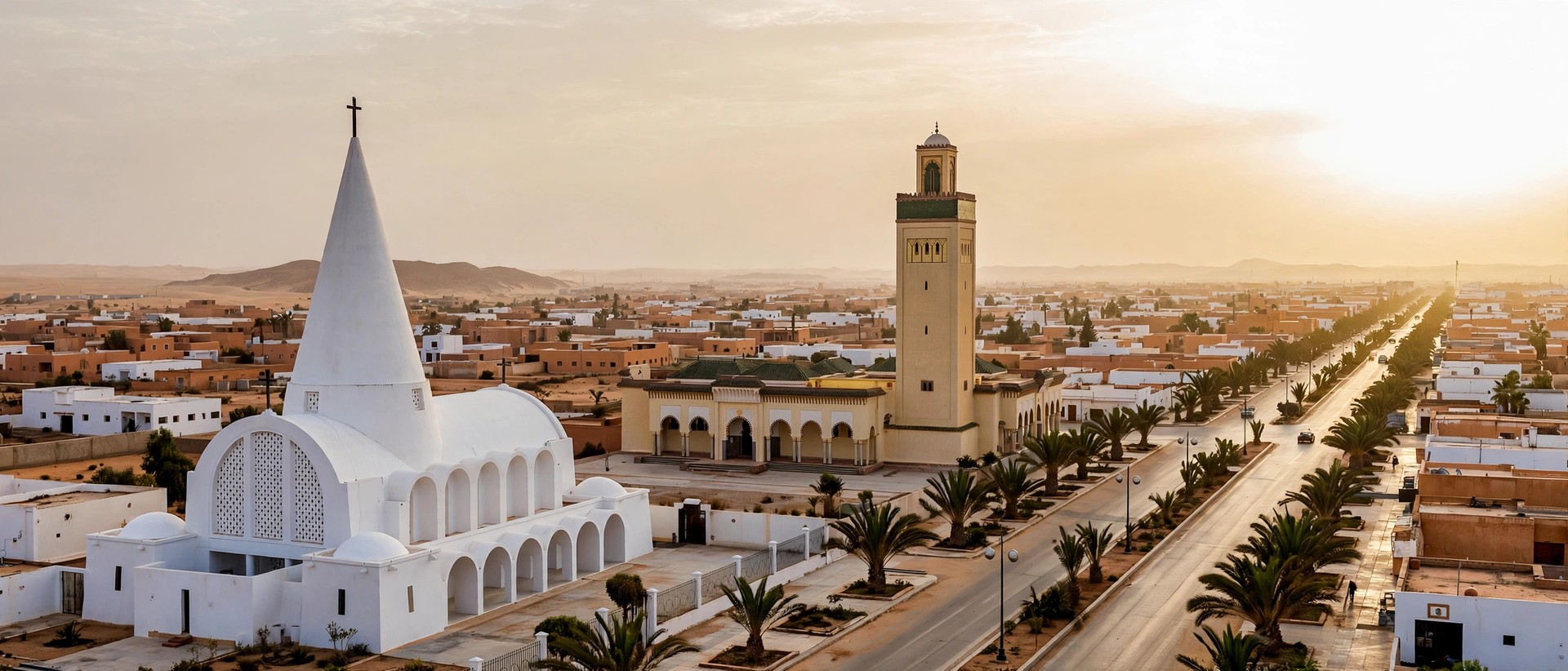
Living in Laayoune is Morocco at its most far-flung: a city of about 263,000 people on the edge of the Sahara, some 13 km from the Atlantic on the southern bank of the Saguia el Hamra river. Laayoune is the capital of the Laayoune-Sakia El Hamra region and its largest city, founded in 1938 as a Spanish colonial outpost and grown since into a modern administrative and fishing centre, where a white cathedral and a mosque minaret stand side by side.
This is not a polished expat hub. There is no international school, no train station and no old medina full of riads. What living in Laayoune offers instead is space, sea air, very low costs and a front-row seat to Saharan life — the camel market, the beach at Foum El Oued, fresh fish from El Marsa and the dunes rolling away to the south. This guide, part of our Living in Morocco series, covers costs, housing, healthcare, internet and the honest downsides. All prices are in Moroccan dirhams (MAD), checked in November 2026, at roughly 10 MAD to $1.
In this guide
- Laayoune at a Glance
- Why Expats Choose Living in Laayoune
- Where to Live in Laayoune: Neighbourhoods
- Housing and Rents in Laayoune
- Monthly Budget for Living in Laayoune
- Food and Daily Life
- Getting Around Laayoune
- Healthcare in Laayoune
- Schools and Family Life
- Internet and Working Remotely from Laayoune
- Climate and Seasons in Laayoune
- Weekend Trips from Laayoune
- Practical Tips: What to Know Before Moving to Laayoune
- Frequently Asked Questions
- Conclusion
Laayoune at a Glance
| Fact | Detail |
|---|---|
| Location | Southern Morocco, Laayoune-Sakia El Hamra region, ~13 km from the Atlantic |
| Population | 262,791 (2024 census) |
| Character | Regional capital and fishing port, a modern Saharan city |
| Elevation | About 72 metres |
| Nearest airport | Hassan I Airport (EUN), about 2.5 km from the centre |
| Budget, single person | 5,500–9,000 MAD ($550–$900) a month |
| Budget, couple | 9,000–14,000 MAD ($900–$1,400) a month |
Laayoune sits on the Saguia el Hamra, the great dry riverbed that gives the region its name — Laayoune itself comes from the Arabic for "the springs". Founded in 1938 by the Spanish officer Antonio de Oro, the city grew rapidly after the Green March of November 1975 and Spain's withdrawal in February 1976. The territory's final status is internationally disputed; it is administered by Morocco. Read more on Wikipedia.
Why Expats Choose Living in Laayoune
The first reason people choose living in Laayoune is the combination of desert and ocean. The Sahara begins at the city limits, yet the Atlantic is a twenty-minute drive away, and the Canary Current keeps the climate mild all year — no freezing winters, no 45°C summers. For writers, photographers and anyone who works online and wants Morocco without the crowds, that is the draw.
The second reason is cost. Living in Laayoune is among the cheapest ways to live in Morocco: a one-bedroom flat can cost about 1,060 MAD a month, and the city was recently ranked the cheapest in the country for renting. The trade is real — a small foreign community, limited services and a long way from anywhere else — and the rest of this guide makes it with your eyes open.
Where to Live in Laayoune: Neighbourhoods
Most of daily life for people living in Laayoune happens within a few kilometres, and a petit taxi covers almost any trip in town for a few dirhams.
The city centre, around Avenue Moulay Abdelaziz and the main square, is where most newcomers start: banks, pharmacies, cafes and the covered market within a short walk. Flats here are simple, often above shops.
Hay Al Massira and Hay Al Wahda, the large residential districts, are the comfortable choice for a longer stay: wider streets, newer buildings and better odds of a balcony, a parking spot and a flat with proper sun protection.
El Marsa, the port district on the coast, is the place for sea air and the fishing harbour, while Foum El Oued, the beach suburb about 25 km south-west, suits those who want the Atlantic on their doorstep.
Housing and Rents in Laayoune
Renting while living in Laayoune works the way it works in most small Moroccan cities: the best flats move by word of mouth, not listing sites. The local semsar, the neighbourhood broker, knows what is free; so do cafe owners and hotel receptionists.
Expect a simple contract in French or Arabic, a deposit of one to two months' rent (the legal maximum is two months under Law 67-12), and a flat that is usually unfurnished. As a planning range for November 2026: one-bedroom in the centre 1,200–2,000 MAD ($120–$200), outside the centre 900–1,600 MAD ($90–$160); three-bedroom in the centre 2,500–4,000 MAD ($250–$400). Our renting an apartment in Morocco guide explains the contract rules.
Never pay a full year upfront for a flat seen only in photos — rent month to month until you know the building. Check water pressure, hot water and heating before you sign: winter mornings can be foggy and damp, and many flats have no heating, so a sunny flat matters more here than a view.
Monthly Budget for Living in Laayoune
A realistic monthly budget for living in Laayoune in a modest flat, cooking mostly at home and eating out a few times a week — planning ranges, checked in November 2026.
| Expense | Single person (MAD) | Couple (MAD) |
|---|---|---|
| Rent, one-bedroom centre | 1,200–2,000 | — |
| Rent, two-bedroom centre | — | 2,000–3,500 |
| Utilities (electricity, water) | 250–500 | 400–800 |
| Internet and mobile | 200–350 | 300–500 |
| Groceries and market | 1,400–2,400 | 2,400–3,800 |
| Eating out and cafes | 300–700 | 500–1,100 |
| Local transport | 150–300 | 250–500 |
| Healthcare and pharmacy | 200–500 | 300–700 |
| Leisure and trips | 300–700 | 500–1,000 |
| Total | 5,500–9,000 | 9,000–14,000 |
The biggest saving against the big cities is rent, and the second is food: the daily market sells what the region's farms and the Atlantic catch provide — fish, vegetables, dates and olives. Heating in winter is the cost newcomers forget: a damp, foggy January can add 200–400 MAD a month to the electricity bill if you run heaters.
Food and Daily Life
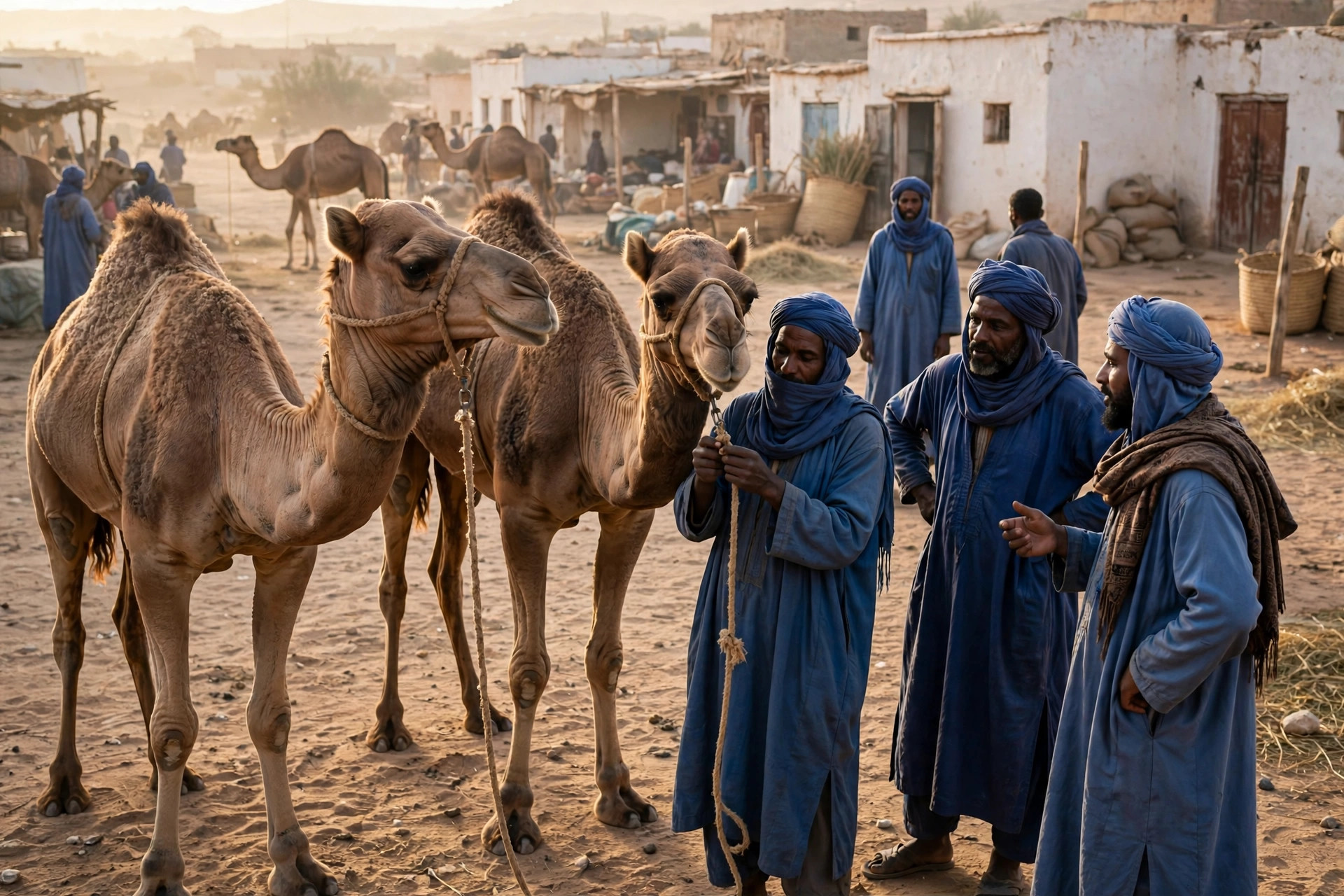
Daily life for people living in Laayoune runs on the market: the covered market and the street stalls sell lamb, chicken, fish and produce trucked up from the Souss, and bread comes from the neighbourhood bakery, still warm, for a dirham or two. The camel market is the event of the week — traders in blue robes bargaining over camels on Thursday and Friday mornings.
Eating out while living in Laayoune is simple and cheap: a tagine or grilled fish lunch runs 25–50 MAD ($2.50–$5), a harira and bread breakfast less than 15 MAD, and mint tea in a cafe 5–10 MAD. Seafood is the local pride — the catch from El Marsa fills the fish stalls every morning — and Saharan tea, poured high in three glasses, the last the sweetest, is a ritual, not a drink. Our cost of living in Morocco guide puts these prices in a national context.
Getting Around Laayoune
Getting around while living in Laayoune is easy: the city is compact enough to cross by taxi in minutes. Petit taxis run everywhere for a few dirhams a ride, and grand taxis connect the city to Smara and Tarfaya. There is no train station — this is a bus, taxi and plane city.
For longer trips, Hassan I Airport (EUN) is about 2.5 km from the centre, with Royal Air Maroc flights to Casablanca (about 1 hour 35 minutes, daily), Agadir (about 1 hour 10 minutes), Rabat, Marrakech and Dakhla, plus Binter flights to Las Palmas in the Canary Islands in about 45 to 50 minutes. CTM and Supratours buses run the long road north: Agadir takes about 12 hours and Marrakech about 17. The N1 coastal road runs north to Agadir and south to Dakhla, about 620 km away. Our Laayoune travel guide covers the routes in detail.
Budget for desert driving: carry water, check the fuel gauge before the long empty stretches south, and expect fog on the coastal road on winter mornings.
Healthcare in Laayoune
People living in Laayoune have a regional hospital for general care and emergencies, plus private clinics and pharmacies in the centre. For routine care — a doctor's visit, a prescription, a minor injury — the city is well served, and a private GP consultation typically costs 150–250 MAD ($15–$25).
For anything serious, the plan is Agadir or Casablanca: the nearest large hospitals with full specialist cover are a flight or a long drive away, and that is the honest trade of living so far south. The picture is improving — a new 500-bed university hospital is under construction, and a new urban health centre opened in November 2025 — but it matters most for families with young children and for anyone who needs regular specialist care. Our healthcare in Morocco guide explains public and private cover for expats.
Schools and Family Life
There is no international school in Laayoune, and no French mission school — the plain fact families need first. Children go to Moroccan public or local private schools, where teaching is in Arabic and French, and a child who arrives speaking neither will need a year of patience and language support. The nearest international schools are in Agadir, about 630 km away, so most expat families here either home-school or accept the local system.
What living in Laayoune gives families in return is space, safety and a childhood shaped by the desert and the sea: children play in the streets, the air is clean, and the beach, the camel market and the dunes give children a Moroccan childhood rather than an international-school bubble. The city also hosts a university campus, so older students have a local route into higher education.
Internet and Working Remotely from Laayoune
Remote workers living in Laayoune will find the basics in place: fibre internet is available in much of the city through Maroc Telecom, Orange and inwi, and 4G coverage is good. A home fibre line typically costs 200–350 MAD ($20–$35) a month, and a mobile data top-up is cheap enough to keep as a backup.
The honest caveats: speeds are lower than in Casablanca or Rabat, and the foggy mornings off the Atlantic can slow a connection for a few hours. Our SIM cards and mobile data guide explains the local operators. Cafes with wifi exist, but there is no coworking space — most remote workers here work from home, with a terrace and a view of the palms.
Climate and Seasons in Laayoune
Living in Laayoune means living with a desert climate softened by the ocean: very dry air, mild temperatures all year and a morning fog that locals call the camanchaca. Daytime highs average about 22°C in January and close to 30°C in August, and nights rarely drop below 12°C. Rain is rare, about 30 mm a year, so plan for sun, wind and fog rather than umbrellas.
| Season | Daytime | Nights | Best for |
|---|---|---|---|
| Winter (Dec–Feb) | 20–23°C | 12–15°C | Settling in, beach walks, clear desert light |
| Spring (Mar–May) | 23–27°C | 14–17°C | Camel market mornings, coastal drives |
| Summer (Jun–Aug) | 28–31°C | 18–20°C | The beach at Foum El Oued, evening cafes |
| Autumn (Sep–Nov) | 25–29°C | 16–19°C | Fishing trips, desert drives, golden light |
Winter is the reward: daytime temperatures around 22°C, cool nights and the clearest desert light of the year. Summer is the mildest in the Moroccan south — the ocean breeze keeps the heat in check — and the foggiest mornings come in winter and spring, when the city wakes up wrapped in white.
Weekend Trips from Laayoune
Weekends are where living in Laayoune pays off: the beach, the desert and the old Spanish towns of the south are all within a few hours.
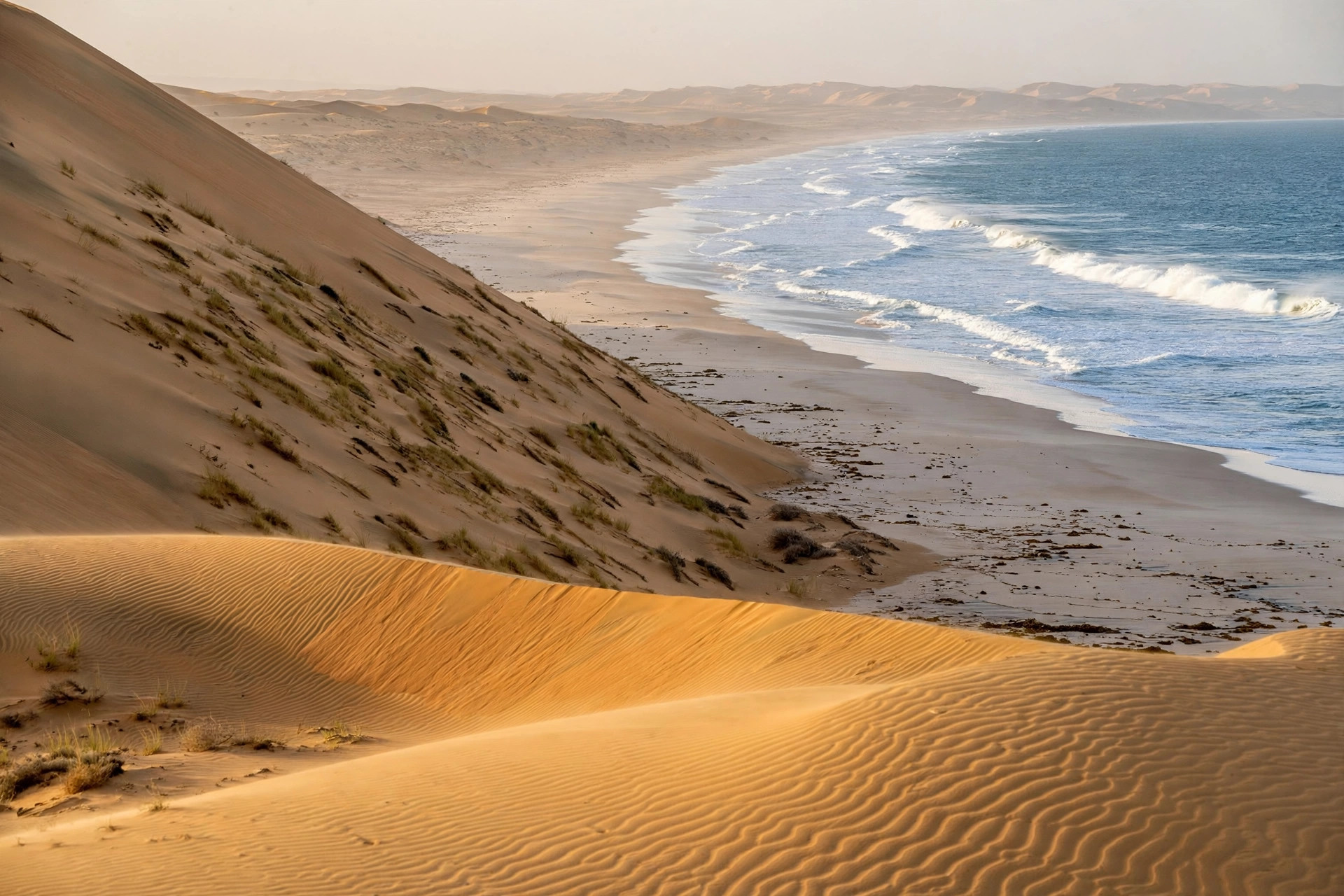
Foum El Oued, about 25 km south-west, is the closest escape — a long Atlantic beach where the dunes meet the sea, reached in half an hour, and the easiest sunset walk in the region.
El Marsa, the fishing port, is the working harbour at the mouth of the Saguia el Hamra: trawlers, fish stalls and the freshest catch in the south, best visited early in the morning.
Tarfaya, about 110 km north, is the old airmail town where Antoine de Saint-Exupéry flew in the 1920s — a windswept port with a small museum and a long beach.
Smara, about 240 km east, is the holy city of the desert, founded by Sheikh Ma el-Ainin in the 19th century, with a library and a zawiya that still draw pilgrims.
Dakhla, about 620 km south, is the big weekend trip: the lagoon, the kitesurfing and the white dunes, a full day's drive down the N1 or a short flight. Our Dakhla travel guide covers it in detail.
Practical Tips: What to Know Before Moving to Laayoune
Learn some French first, then Darija. French runs the administration, the banks and the clinics; Darija runs the souk and the street. Hassaniya, the Arabic of the Sahara, is also heard every day, and a greeting in either opens doors.
Bring cash for the souk. Cards work in supermarkets and larger shops, but the market, the taxis and the small cafes run on cash — keep small notes and coins.
Rent before you buy, and visit in winter first. A flat that feels perfect in October can be damp and foggy in January — our about page explains how these guides are researched and priced.
Carry your passport, not just an ID card. Travellers sometimes face extra ID checks at the airport and on the road south, so keep it with you when you travel.
Respect the market. The camel market is a working market, not a show: ask before photographing people, dress modestly, and go early — the trading is mostly done by mid-morning.
Frequently Asked Questions
Is Laayoune safe for expats?
Yes. Laayoune is a quiet, conservative city with low street crime, and foreigners who respect local customs are welcomed. The usual advice applies: keep valuables out of sight in crowds and avoid walking alone late at night in unfamiliar districts.
How much does it cost to live in Laayoune?
A single person can live comfortably on 5,500–9,000 MAD ($550–$900) a month, and a couple on 9,000–14,000 MAD ($900–$1,400). Rents are among the lowest in Morocco — a one-bedroom flat costs about 1,060 MAD a month on average — and food from the market is cheap.
What is the weather like in Laayoune?
Mild all year. Daytime highs average about 22°C in January and close to 30°C in August, nights rarely drop below 12°C, and rain totals only about 30 mm a year. Mornings are often foggy, especially in winter and spring, when the Atlantic fog rolls in off the sea.
Can I live in Laayoune without speaking Arabic?
You can manage with French in banks, clinics and administration, but daily life in the souk and with neighbours runs on Darija and Hassaniya. A few months of French and basic Darija will change the experience completely.
How far is Laayoune from Casablanca?
About 1,100 km by road, roughly 18 to 20 hours by bus or a 1 hour 35 minute flight to Hassan I Airport. Agadir is about 630 km north on the N1 coastal road, and Dakhla about 620 km south.
Is Laayoune a good base for exploring the Sahara?
Yes — that is its main strength. From Laayoune the road south runs through the desert to Dakhla, the beach at Foum El Oued is half an hour away, and the camel market brings the Sahara into the city twice a week. Living in Laayoune puts the desert and the Atlantic at your doorstep.
Conclusion
Living in Laayoune is a deliberate choice: the cheapest rents in Morocco, a real Saharan culture that has not been packaged for tourists, and a beach, a camel market and the open desert all within a few hours. The price is honest too — a small foreign community, a long way from the nearest big-city hospital and a city that can feel quiet after dark. If you want Morocco at its most open and least crowded, and you can handle the distance, living in Laayoune rewards you with space, sea air and a Thursday market you will never forget.