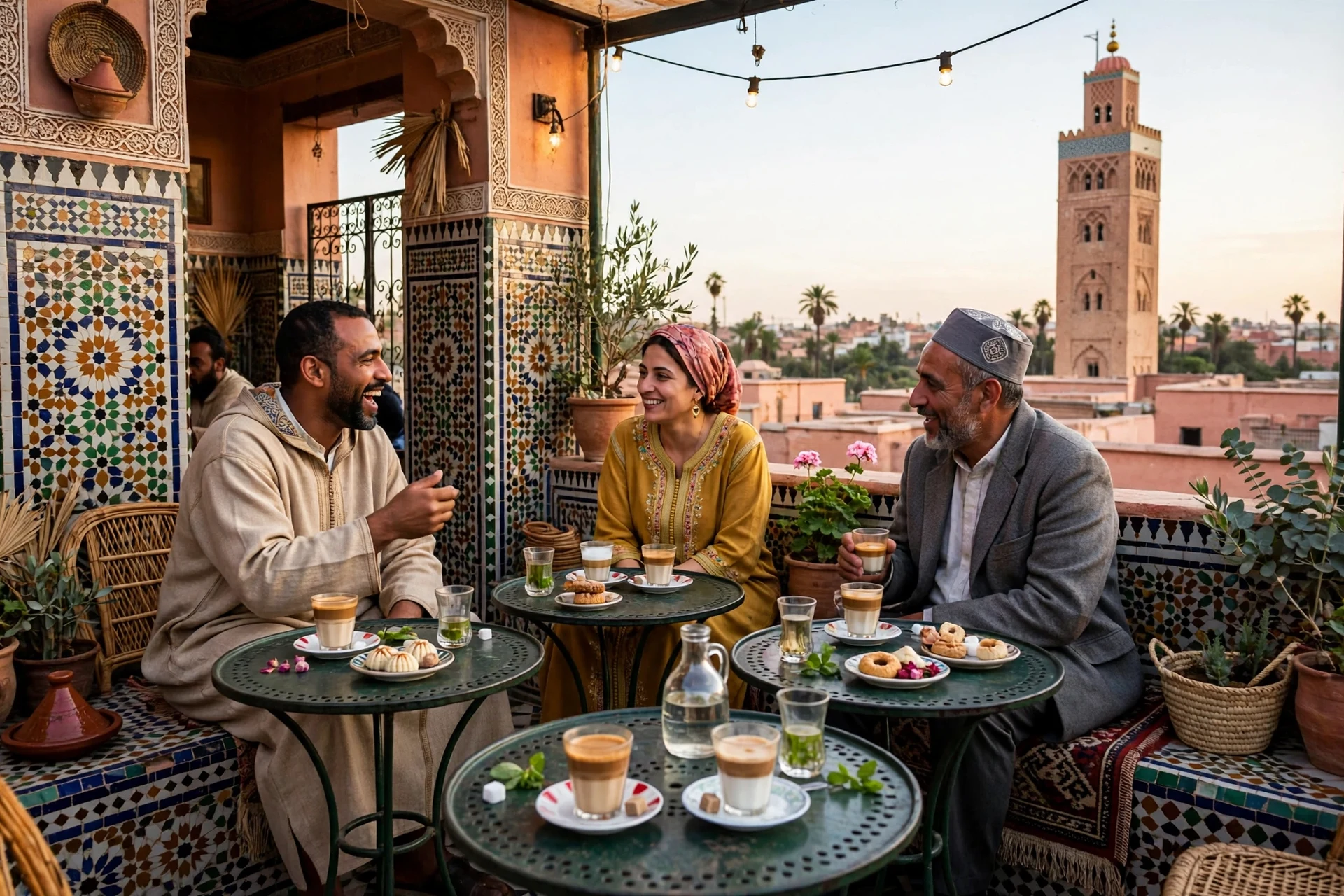
Morocco coffee prices are one of the pleasant surprises of travelling here: a proper coffee in a neighbourhood cafe costs 8 to 12 MAD (about $0.80 to $1.20), and even a cappuccino in a smart city cafe rarely passes 30 MAD (about $3). Coffee is not a luxury here — it is a daily ritual.
The range is wide, though. Prices run from a few dirhams at a plastic-chair cafe to 95 MAD (about $9.50) for a cappuccino in a five-star hotel lounge. This guide gives you the real 2026 numbers by drink, by city and by cafe type, plus the local habits that make Moroccan coffee culture worth slowing down for. It sits in our Costs & Practical Life section, next to our Moroccan Food Guide.
In this guide
- Morocco Coffee Prices at a Glance
- How Much Does Coffee Cost in Morocco in 2026?
- Morocco Coffee Prices by Drink: Espresso to Flat White
- Morocco Coffee Prices by City: Marrakech to Tangier
- Morocco Coffee Prices by Cafe Type: From 8 MAD to 95 MAD
- The Nous Nous: Morocco’s Signature Coffee
- Where to Drink the Best Coffee in Morocco
- Coffee to Take Away: Beans, Ground Coffee and Supermarket Prices
- Tipping and Paying for Coffee in Morocco
- Morocco Coffee Prices and Your Daily Budget
- Coffee Culture: How Moroccans Actually Drink Coffee
- Common Coffee Mistakes Visitors Make
- How to Pay the Lowest Morocco Coffee Prices: 7 Tips
- Frequently Asked Questions
- Conclusion: What Coffee Really Costs in Morocco
Morocco Coffee Prices at a Glance
Morocco coffee prices start at 8 MAD (about $0.80) for a nous nous in a neighbourhood cafe and rise to 95 MAD (about $9.50) for a cappuccino in a luxury hotel. The national average is about 11 MAD (about $1.10) for an espresso and 16 MAD (about $1.60) for a cappuccino. Most visitors pay 12 to 25 MAD per coffee, and a coffee with a pastry rarely costs more than 30 MAD.
| Fact | 2026 figure |
|---|---|
| Cheapest coffee (neighbourhood cafe) | 8–12 MAD (~$0.80–$1.20) |
| National average espresso | 11 MAD (~$1.10) |
| National average cappuccino | 16 MAD (~$1.60) |
| Mid-range cafe cappuccino | 20–28 MAD (~$2–$2.80) |
| Specialty cafe cappuccino or latte | 30–40 MAD (~$3–$4) |
| Luxury hotel cappuccino | 80–95 MAD (~$8–$9.50) |
| Mint tea, for comparison | 10–25 MAD (~$1–$2.50) |
| Typical daily coffee spend (2 coffees) | 20–70 MAD (~$2–$7) |
Last checked: November 2026. Prices are shown on the menu board in almost every cafe, so you always know the cost before you sit down.
How Much Does Coffee Cost in Morocco in 2026?
Morocco coffee prices in 2026 are still among the lowest in the Mediterranean. A plain espresso in an ordinary cafe costs 8 to 15 MAD (about $0.80 to $1.50), a nous nous costs 8 to 12 MAD, and a cappuccino costs 12 to 25 MAD in most places. These are the prices Moroccans pay every day, and they have barely moved in years.
The gap between the cheapest and the most expensive coffee in Morocco comes from the setting, not the bean. The same espresso that costs 10 MAD at a cafe on a side street costs 20 MAD on a main square, 35 MAD in a specialty roastery, and 80 MAD in a five-star hotel. Prices follow the chair you sit in.
The price on the menu is the price you pay: cafes add no service charges or taxes, and the price includes sitting as long as you like. Nobody hurries you off a table after one coffee.
Morocco Coffee Prices by Drink: Espresso to Flat White
Prices vary by drink, but the differences are small in ordinary cafes and large in specialty ones. The classic order is the nous nous, and it is also the cheapest.
| Drink | Neighbourhood cafe | Mid-range cafe | Specialty cafe |
|---|---|---|---|
| Espresso | 8–12 MAD (~$0.80–$1.20) | 15–20 MAD (~$1.50–$2) | 20–30 MAD (~$2–$3) |
| Double espresso | 12–18 MAD (~$1.20–$1.80) | 20–25 MAD (~$2–$2.50) | 30 MAD (~$3) |
| Americano | 10–15 MAD (~$1–$1.50) | 18–25 MAD (~$1.80–$2.50) | 30 MAD (~$3) |
| Nous nous (half coffee, half milk) | 8–12 MAD (~$0.80–$1.20) | 15–20 MAD (~$1.50–$2) | 25–35 MAD (~$2.50–$3.50) |
| Cappuccino | 12–18 MAD (~$1.20–$1.80) | 20–28 MAD (~$2–$2.80) | 35 MAD (~$3.50) |
| Cafe latte | 12–18 MAD (~$1.20–$1.80) | 20–28 MAD (~$2–$2.80) | 35–40 MAD (~$3.50–$4) |
| Flat white | Rarely on the menu | 25–30 MAD (~$2.50–$3) | 25–35 MAD (~$2.50–$3.50) |
| Iced coffee / iced latte | 15–25 MAD (~$1.50–$2.50) | 25–35 MAD (~$2.50–$3.50) | 40 MAD (~$4) |
If you only remember one price: a nous nous costs about 10 MAD in the Morocco most people live in. Anything above 35 MAD means you are paying for the view, the brand or the air conditioning, not for better coffee.
Morocco Coffee Prices by City: Marrakech to Tangier
Coffee prices change by city, but not by much. Marrakech is the most expensive for tourists, because the cafes on Jemaa el-Fna and in Guéliz charge tourist prices, while the cafes two streets back charge local ones. Casablanca and Rabat sit in the middle, and the small towns of the Atlas and the Rif are the cheapest places to drink coffee in the country.
| City | Espresso | Cappuccino | Notes |
|---|---|---|---|
| Marrakech (medina) | 10–15 MAD (~$1–$1.50) | 15–25 MAD (~$1.50–$2.50) | Rooftop cafes charge more |
| Marrakech (Guéliz) | 15–20 MAD (~$1.50–$2) | 25–35 MAD (~$2.50–$3.50) | Specialty cafes cluster here |
| Casablanca | 12–18 MAD (~$1.20–$1.80) | 18–30 MAD (~$1.80–$3) | Chains and roasteries are common |
| Rabat | 12–18 MAD (~$1.20–$1.80) | 17–28 MAD (~$1.70–$2.80) | Agdal and the medina are cheapest |
| Fes | 8–15 MAD (~$0.80–$1.50) | 12–22 MAD (~$1.20–$2.20) | One of the cheapest big cities |
| Tangier | 12–20 MAD (~$1.20–$2) | 18–30 MAD (~$1.80–$3) | Northern prices run slightly higher |
| Essaouira | 10–15 MAD (~$1–$1.50) | 15–25 MAD (~$1.50–$2.50) | Port cafes are good value |
| Chefchaouen | 8–12 MAD (~$0.80–$1.20) | 12–20 MAD (~$1.20–$2) | Small-town prices, mountain views |
The pattern is simple: the further you walk from the main square, the cheaper the coffee gets. In Marrakech, a cappuccino on the Jemaa el-Fna can cost 30 MAD, while the same drink three streets away costs 15 MAD. Walk five minutes and the coffee halves in price — and usually tastes better, because the cafe serves regulars.
Morocco Coffee Prices by Cafe Type: From 8 MAD to 95 MAD
Prices make sense once you know the five kinds of cafe. The neighbourhood cafe is a room full of men watching football, with plastic chairs and a television in the corner, and the coffee costs 8 to 12 MAD. The modern city cafe has sofas, Wi-Fi and a printed menu, and the coffee costs 15 to 25 MAD. The specialty roastery has single-origin beans and latte art, and the coffee costs 25 to 40 MAD. The international chain charges 20 to 40 MAD for a standard drink, and the five-star hotel lounge charges 80 to 95 MAD — and you are paying for the chandeliers.
The neighbourhood cafe is where Morocco really drinks its coffee, and it is the best value in the country: strong, dark coffee in a small glass and a waiter who knows the regulars. The specialty roastery is the opposite experience — lighter roasts, careful brewing, and a price that matches a European cafe. Both are worth trying, and the gap between them is the story of Moroccan coffee in 2026.
The Nous Nous: Morocco's Signature Coffee
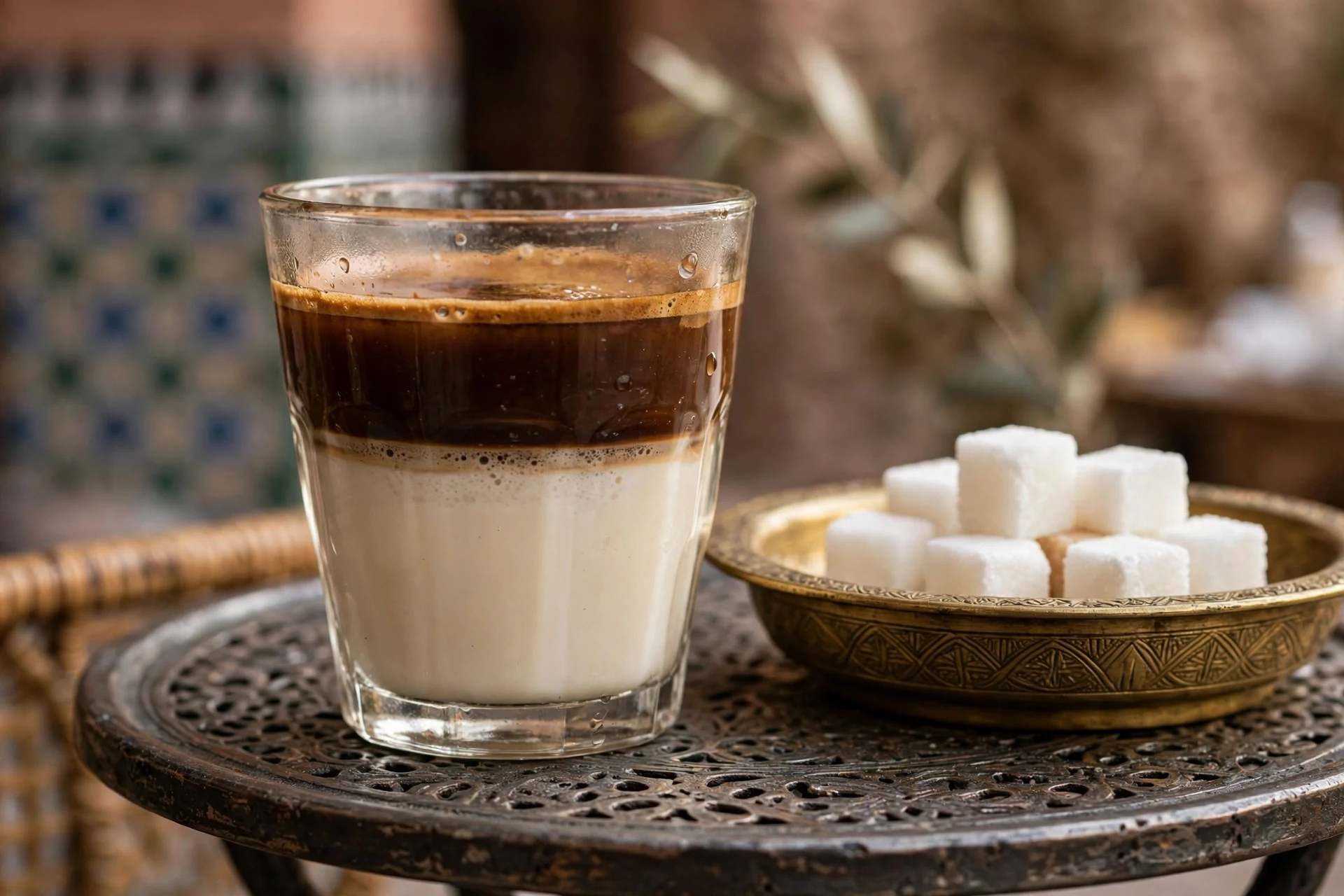
The nous nous is the drink to order if you order one thing in Morocco. The name means "half half" in French: half espresso and half hot milk, served in a small glass, usually with sugar on the side. It costs 8 to 12 MAD in a neighbourhood cafe and 15 to 25 MAD in a smarter one — the drink most Moroccans order, morning and afternoon.
It is not a latte and it is not a cappuccino: a nous nous has no foam art and no syrup, and the milk is hot and plain, which lets the coffee come through. Order it "sans sucre" if you take it without sugar, because the default is sweetened. In the morning, Moroccans drink it with bread and olive oil or a croissant; in the afternoon, it is the drink of the long sit.
Where to Drink the Best Coffee in Morocco
The best coffee in Morocco is not in one city, and it is not always the most expensive. Marrakech has the strongest specialty scene, with roasteries in Guéliz serving single-origin beans and proper flat whites, and the medina's rooftop cafes serve decent coffee with the best views in the country. Casablanca has the widest choice, from old French-style cafes on Boulevard Mohammed V to modern roasteries in Maârif.
Rabat is the quiet surprise: the cafes around Agdal and the medina serve excellent coffee at honest prices, with some of the best pastry to go with it. Fes is the place for the traditional experience — a nous nous near the tanneries or the Blue Gate, watching the city go past. Tangier's cafe culture is the oldest in the country, and the coffee there still costs less than in Marrakech. Everywhere, the best cafe is usually the one full of Moroccans, not tourists.
Coffee to Take Away: Beans, Ground Coffee and Supermarket Prices
Morocco coffee prices are not only about cafes: many visitors buy coffee to take home, and the supermarket prices are just as friendly. A 250 g bag of ground coffee costs 25 to 40 MAD (about $2.50 to $4) in a Marjane or Carrefour, a 200 g jar of instant coffee costs 30 to 45 MAD, and a kilo of whole beans from a roastery costs 80 to 120 MAD (about $8 to $12). The classic Moroccan choice is a dark-roast ground coffee, often sold in the souk by weight.
If you want a souvenir with a story, buy beans from a specialty roastery in Marrakech or Casablanca — they will grind them to your order and tell you the origin. The small packets of spiced coffee sold in the medina make a good gift, but do not buy pre-ground coffee from a stall with no label and no price. See our Morocco Grocery Prices guide for the full supermarket picture, and our Morocco Money Guide: The Dirham Explained for how cash works.
Tipping and Paying for Coffee in Morocco
Tipping for coffee in Morocco is simple, and the amounts are small. In a neighbourhood cafe, rounding up to the nearest 5 MAD is enough — leave 10 MAD for an 8 MAD coffee and the waiter is happy. In a mid-range cafe, 2 to 5 MAD is normal; in a smart cafe or hotel, 5 to 10 MAD is generous. Nobody expects a percentage tip on a coffee.
Paying is easy: cash is king in small cafes, and many neighbourhood places do not take cards at all, so carry small notes and coins. Mid-range cafes and chains take cards happily, and contactless payment works in most of them. The bill comes to the table — keep the coins for the next coffee, the taxi and the toilet. See our Tipping in Morocco guide for the full picture, and our Morocco Restaurant Prices guide for what meals cost.
Morocco Coffee Prices and Your Daily Budget
Morocco coffee prices barely move a trip budget, and that is part of their charm. Two coffees a day in neighbourhood cafes cost about 20 MAD (about $2) — less than one coffee in most European cities. Two cappuccinos in mid-range cafes cost 40 to 55 MAD (about $4 to $5.50). Even three specialty coffees a day cost only about 90 to 105 MAD (about $9 to $10.50).
A budget traveller spending 300 to 500 MAD a day adds 20 MAD for coffee without noticing it; a mid-range traveller adds 50 MAD. Coffee is the cheapest pleasure in Morocco, and the one you will repeat most often. For the full budget, see our How Much Does a Trip to Morocco Cost? and Cost of Living in Morocco guides.
Coffee Culture: How Moroccans Actually Drink Coffee
Coffee in Morocco is not a drink you grab on the way somewhere — it is the somewhere. The cafe is where business is done, where football is watched, where friends meet after work and where old men spend the whole afternoon over a single glass. A coffee ordered at 4 p.m. can still be sitting, half finished, at 6 p.m. The waiter will not bring the bill until you ask.
There are a few customs worth knowing. Coffee is drunk slowly, in small sips, and the glass is small on purpose. Sugar comes on the side. In the morning, coffee comes with bread and olive oil; in the afternoon, with conversation. The old neighbourhood cafes are still mostly male in the afternoons, while the modern cafes in the new districts are mixed and welcoming to everyone. And mint tea, not coffee, is the drink of hospitality: if someone invites you home, you will be offered tea first.
Common Coffee Mistakes Visitors Make
The first mistake is paying hotel prices for ordinary coffee. A cappuccino in your hotel lounge costs 80 MAD, while the same drink in the cafe across the street costs 20 MAD — and the cafe version is often better. The second mistake is ordering a cappuccino when you want a nous nous: the cappuccino is the tourist order, the nous nous is the local one, and the local one costs less and tastes more like Morocco.
The third mistake is tipping like you are at home. A 20% tip on a 10 MAD coffee is 2 MAD, which is fine — but handing over a 50 MAD note and waving away the change is not generosity, it is confusion, and it marks you out instantly.
The fourth mistake is expecting fast service: coffee in Morocco is slow by design, and the waiter is not ignoring you, he is giving you the table for as long as you want it. The fifth mistake is assuming every cafe takes cards — the best, cheapest ones often do not, so carry cash. And the last mistake is skipping coffee altogether and drinking only mint tea: tea is wonderful, but you would miss half of daily life.
How to Pay the Lowest Morocco Coffee Prices: 7 Tips
Paying the lowest Morocco coffee prices is mostly about where you sit, not how you haggle — cafe prices are fixed, and nobody bargains over a coffee.
- Drink where the locals drink. A cafe full of Moroccans charges local prices; a cafe full of tourists charges tourist prices.
- Order a nous nous, not a cappuccino. The local drink, which costs less and tastes more like Morocco.
- Walk two streets from the main square. The price often halves within five minutes.
- Sit downstairs, not on the rooftop. Terraces charge for the view, and the same coffee downstairs costs half as much.
- Skip the hotel lounge. Its 80 MAD cappuccino is the most expensive coffee in the city, and the cafe across the road beats it.
- Carry small notes and coins. Neighbourhood cafes are cash-only.
- Buy beans to take home. A kilo from a roastery costs 80 to 120 MAD and lasts for weeks.
One more habit helps: learn the phrase for your order. "Un nous nous, s'il vous plaît" gets you the local drink with a smile, and the waiter will remember you the next day.
Frequently Asked Questions
How much does a coffee cost in Morocco?
A coffee in Morocco costs 8 to 12 MAD (about $0.80 to $1.20) in a neighbourhood cafe, 15 to 25 MAD in a mid-range cafe, and 25 to 40 MAD in a specialty cafe. The national averages are about 11 MAD for an espresso and 16 MAD for a cappuccino. Morocco coffee prices at a five-star hotel can reach 80 to 95 MAD, so the setting matters more than the drink.
What is a nous nous?
A nous nous is half espresso and half hot milk, served in a small glass — the name means "half half" in French. It is the most popular coffee drink in Morocco, costs 8 to 12 MAD in a local cafe, and comes with sugar on the side. Order it "sans sucre" without sugar.
Is coffee cheap in Morocco?
Yes — coffee is one of the cheapest pleasures in Morocco. Two coffees a day in local cafes cost about 20 MAD (about $2), and even three specialty coffees a day cost under 105 MAD (about $10.50). Compared with Western Europe, where a single cappuccino costs 3 to 5 euros, Morocco coffee prices are roughly a third of what visitors pay at home.
Do cafes in Morocco accept cards?
Mid-range cafes, chains and hotel lounges take cards, and contactless works in most of them. Neighbourhood cafes — the cheapest and most local ones — are usually cash-only, so carry small notes and coins. The currency is the Moroccan dirham; for official visitor information, see Visit Morocco.
How much should I tip for coffee in Morocco?
Round up to the nearest 5 MAD in a neighbourhood cafe, leave 2 to 5 MAD in a mid-range cafe, and 5 to 10 MAD in a smart cafe or hotel. Nobody expects a percentage tip on a coffee — see our Tipping in Morocco guide for the full rules.
Can I buy Moroccan coffee beans to take home?
Yes — a kilo of whole beans from a roastery costs 80 to 120 MAD (about $8 to $12), and a 250 g bag of ground coffee costs 25 to 40 MAD in a supermarket. Buy from a roastery or a labelled packet, not an unlabelled stall, and ask for the grind that matches your brewing method.
Conclusion: What Coffee Really Costs in Morocco
Morocco coffee prices in 2026 are simple: 8 to 12 MAD for a nous nous in a local cafe, 15 to 25 MAD in a mid-range cafe, and 35 MAD for a specialty cappuccino. The most expensive coffee in the country is the one in your hotel lounge, and the best is usually the cheapest — a 10 MAD nous nous in a cafe full of Moroccans, with nowhere to be and no hurry to leave. Drink it slowly, tip a few dirhams, and let the cafe do what it has always done: give you a seat and a glass.
Last checked: November 2026