
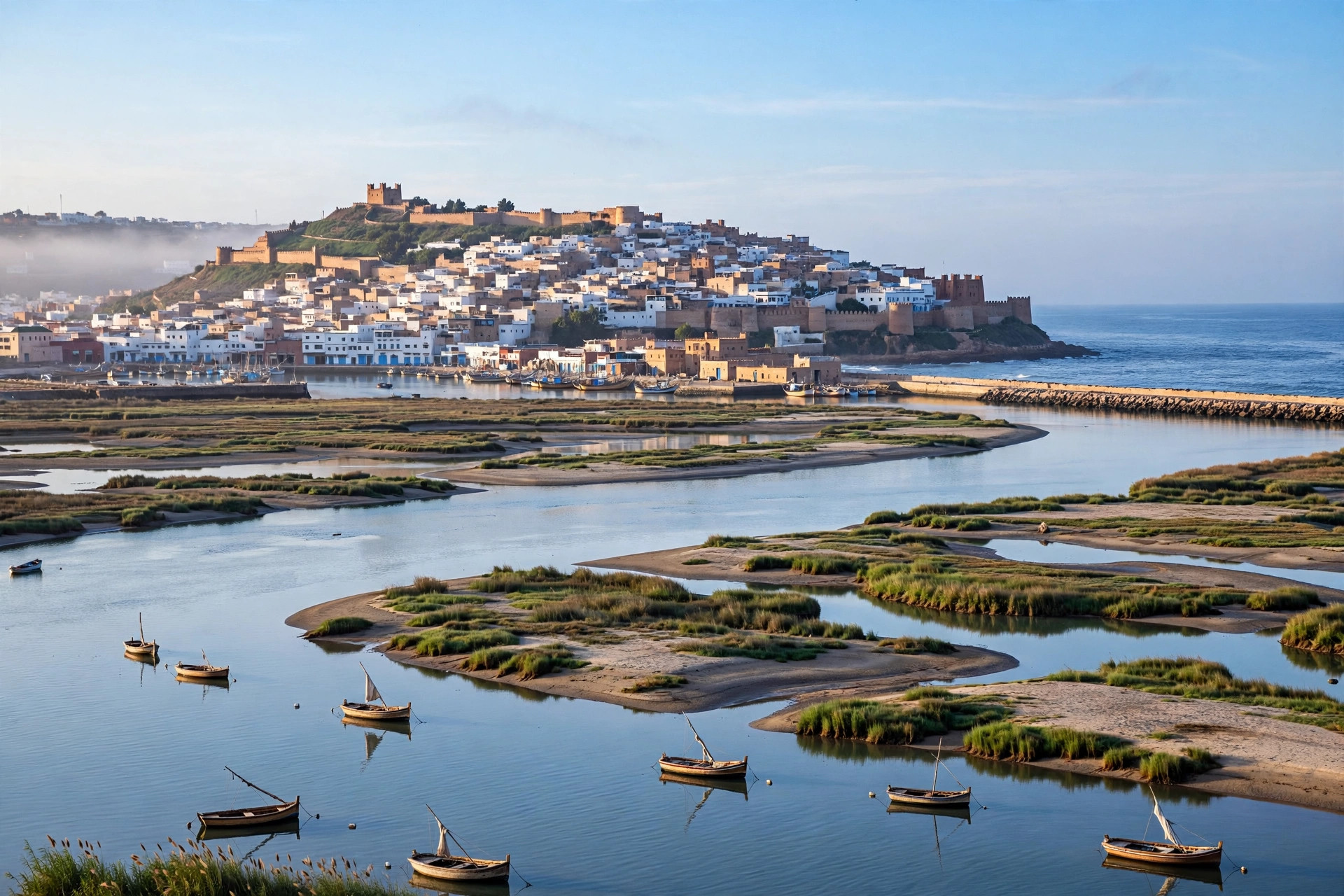
Living in larache is Morocco's quiet-port choice: a town of 133,731 people (2024 census) where the Loukkos River meets the Atlantic, about 85 kilometres south of Tangier. For expats who want sea air, low rents and a real working port without a tourist show, living in larache is one of the most honest choices on the northern coast.
This guide covers the neighbourhoods, rents and routines that make a move to Larache work, with prices checked in November 2026. It sits in our Living in Morocco section, alongside our guides to Asilah and Tangier.
If you want the short version first, living in larache means a small Spanish-era port town, a Roman ruin across the river and a beach at the end of the street.
Larache is the capital of Larache Province in the Tanger-Tetouan-Al Hoceima region, and it grew from 125,008 residents in 2014 to 133,731 in 2024. Spain occupied the town in 1911 and held it until 1956, leaving an ensanche of arcaded streets around the Place de la Libération, and across the river stands Lixus, a Phoenician and Roman city that became a Roman colony in 42 AD. For newcomers, living in larache starts with that mix: a Spanish-era square, a Roman ruin and a harbour.
In this guide
- Why Expats Choose Living in Larache
- Larache at a Glance
- Best Neighbourhoods for Living in Larache
- Rents and Housing: What You Pay in 2026
- Monthly Cost of Living in Larache
- Weather: Mild Winters, Humid Summers and Atlantic Wind
- Getting Around: Buses, Grand Taxis and No Train Station
- Working and Living in Larache: Remote Work, Fishing and the Port
- Daily Life: Souks, the Fishing Port, Lixus and the Beach
- Healthcare in Larache
- Schools for Expat Families
- The Downsides of Living in Larache
- Moving to Larache: Your First Steps
- Frequently Asked Questions
- Conclusion: Is Larache Right for You?
Why Expats Choose Living in Larache
The single biggest reason expats choose living in larache is the price. Cost data for November 2026 puts a one-bedroom flat in the centre at around 2,850 MAD a month, about $285, and outside the centre at around 1,830 MAD, about $183. Groceries and transport follow the same pattern, so a pension or remote salary stretches further here than in Tangier or Asilah.
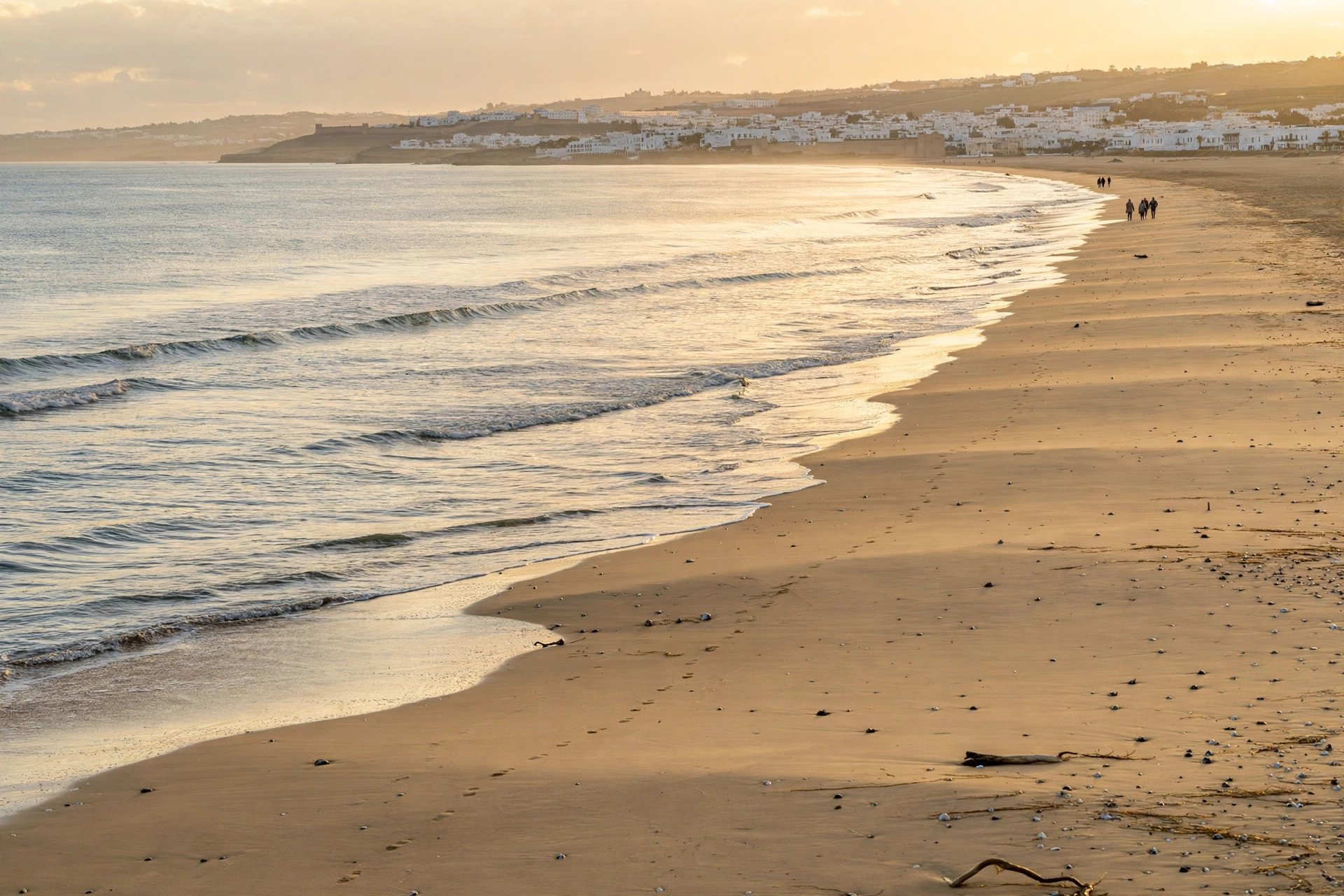
The second reason is the setting. Larache sits where the Loukkos River meets the Atlantic, so the town has a fishing port, a long sandy beach and river views from the old town above the harbour. Living in larache means sea air, gulls over the port at dawn and a sunset walk along the corniche.
The third reason is the calm. Larache receives few international tourists, so the medina is a working market rather than a showpiece and newcomers are treated as neighbours rather than customers. If you want to live inside Moroccan life rather than beside it, living in larache gives you that from the first week.
Larache at a Glance
| Fact | Detail |
|---|---|
| Population (city, 2024 census) | 133,731 |
| Population (2014 census) | 125,008 |
| Population (province, 2024 census) | 510,211 |
| Region | Tanger-Tetouan-Al Hoceima |
| Location | South bank of the Loukkos River mouth, Atlantic coast |
| Spanish period | Occupied 1911, held until 1956 |
| Lixus ruins | About 3–5 km north, on a hill above the Loukkos |
| Distance to Tangier | ~85–90 km by road |
| Distance to Asilah | ~35–40 km |
| Distance to Ksar el-Kebir | ~30–35 km |
| Distance to Rabat | ~190 km |
| Distance to Moulay Bousselham lagoon | ~45 km south |
| Climate | Hot-summer Mediterranean, annual mean ~18.2°C |
| Annual rainfall | ~700 mm |
| August daily mean | ~24.2°C |
| January daily mean | ~12.4°C |
| Record high | 46.4°C, 10 July 2021 |
| Best months | April to June and September to October |
| Famous for | Lixus ruins, fishing port, Spanish ensanche, Loukkos estuary |
| Main languages | Arabic, Spanish, French; Tamazight also spoken; English limited |
Best Neighbourhoods for Living in Larache
The medina sits on the hill above the port, a compact old town of narrow lanes, small shops and houses with river views. Flats here are older and cheaper, often one- and two-bedroom apartments from about 1,500 MAD a month, and the fishing port is a short walk downhill.
The ensanche, the Spanish-built new town around the Place de la Libération, is where most expats land first. Arcaded streets, cafes, banks and pharmacies all sit here, and the flats are practical: one- and two-bedroom apartments with balconies, often furnished, from about 2,000 MAD a month.
The port area is the working heart of town, with the fish market, the harbour and small restaurants serving the morning catch. For many newcomers, living in larache starts here, in a flat above the port where the day begins with the fishing boats. Rents match the ensanche.
The beachfront, south of the port along the Atlantic, is the breeziest place to live in town. The long sandy beach sits at the end of the street, and summer flats here cost more than in the medina, with two-bedroom apartments around 2,500–3,500 MAD a month in the high season.
The southern districts, along the roads out of town, are modern and quiet, with newer apartment blocks, wider streets and parking. The flats are bigger and brighter than in the centre, with two- and three-bedroom family flats around 2,500–3,500 MAD a month.
Rents and Housing: What You Pay in 2026
Rents for anyone living in larache are the town's strongest argument. Cost data for November 2026 puts a one-bedroom flat in the centre at around 2,850 MAD a month (about $285), and outside the centre at around 1,830 MAD (about $183), while a three-bedroom flat in the centre runs around 4,620 MAD (about $462) and outside the centre around 2,720 MAD (about $272). A second data set shows a higher centre figure, so budget for the higher end and treat these as typical ranges.
Search on Avito, Mubawab and local agencies, and always view in person before paying anything. Landlords often ask for two months' rent as a deposit, and an agency fee of about one month's rent is common. Read our guide to renting an apartment in Morocco before you sign, and check whether the price includes syndic charges of 200–500 MAD a month. Winter damp is the thing to check, so look for mould and ask about heating. Ask for the price in writing, and check the water pressure and the roof for leaks before you pay.
| Housing type | Monthly rent (MAD) | Monthly rent (USD) |
|---|---|---|
| 1-bed, outside centre | 1,500–2,000 | $150–$200 |
| 1-bed, centre | 2,500–3,000 | $250–$300 |
| 2-bed flat, ensanche / beachfront | 2,500–3,500 | $250–$350 |
| 3-bed, outside centre | ~2,720 | ~$272 |
| 3-bed, centre | 4,000–5,000 | $400–$500 |
| Small house, beach area | 4,500–7,000* | $450–$700 |
| Deposit (typical) | 2 months' rent | — |
| Agency fee (typical) | ~1 month's rent | — |
Last checked: November 2026. Prices are typical ranges from cost data and vary by building, floor and furnishing. Beach-house rents marked * are typical ranges.
Monthly Cost of Living in Larache
A single expat can live comfortably here on 7,000–9,500 MAD a month, a couple on 10,500–14,500 MAD and a family of three on 14,000–19,500 MAD. Cost data for November 2026 puts a single person's total at about $759 a month including rent, roughly 7,590 MAD, with groceries around $207 a month and utilities around 473 MAD. The monthly cost of life here sits well below Tangier and Asilah, and living in larache on a foreign pension is comfortable rather than tight.
| Monthly expense | Single (MAD) | Couple (MAD) | Family of three (MAD) |
|---|---|---|---|
| Rent (1–3 bed flat) | 1,830–4,620 | 2,500–5,000 | 3,500–6,500 |
| Groceries and markets | 1,200–2,070 | 2,000–3,200 | 3,000–4,500 |
| Eating out and cafes | 500–1,000 | 800–1,600 | 1,200–2,500 |
| Utilities and internet | 400–800 | 550–1,000 | 700–1,300 |
| Transport (taxis, buses) | 300–700 | 500–1,000 | 700–1,400 |
| Health insurance | 300–800 | 600–1,500 | 1,000–2,500 |
| Leisure and weekends | 300–700 | 500–1,000 | 800–1,500 |
| Total | 7,000–9,500 | 10,500–14,500 | 14,000–19,500 |
| Total (USD) | $700–$950 | $1,050–$1,450 | $1,400–$1,950 |
Last checked: November 2026. Budget ranges are typical for November 2026 and vary by lifestyle.
Weather: Mild Winters, Humid Summers and Atlantic Wind
Larache has a hot-summer Mediterranean climate, softened by the Atlantic and the Loukkos estuary. The annual mean is about 18.2°C, and about 700 mm of rain falls in a year. August is the warmest month, with a daily mean of 24.2°C and afternoon highs around 28.7°C, while January is the coldest, with a daily mean of 12.4°C and night lows near 8°C.
The best months are April to June and September to October, when the days are mild and the Atlantic breeze keeps the air fresh. Summer humidity is the price of the sea air: afternoons feel warmer than the thermometer says, and the town fills with Moroccan holidaymakers in July and August. Winter rain is heavy, with November the wettest month, and the record high of 46.4°C was set on 10 July 2021.
Getting Around: Buses, Grand Taxis and No Train Station
Larache has no train station of its own. The nearest rail hub is Ksar el-Kebir, about 30 kilometres inland, where ONCF trains run to Tangier in about an hour and a half and to Rabat in about two hours, with fares of roughly 40–70 MAD. From Ksar el-Kebir, a grand taxi covers the last stretch in about 40 minutes for around 15 MAD. Book trains on the ONCF website. That gap shapes daily life: living in larache without a car means planning around buses and grand taxis.
In practice, most travel here is by bus. CTM runs to Tangier in about an hour and a half for 48–85 MAD, and to Rabat in about two and a half hours for roughly 90–140 MAD. Buses to Kenitra take around two hours, and to Casablanca around four hours. For Lixus, take a petit taxi or a grand taxi: the ruins sit about 3–5 kilometres north of town, a ten-minute ride.
Inside the town, petits taxis cost 7–10 MAD for a ride across town, and the centre is small enough to cross on foot. Tangier Ibn Battouta Airport sits about 85 kilometres north, roughly an hour and a half by road, so most expats fly through Tangier rather than Casablanca.
| Route | Mode | Time | Price (MAD) |
|---|---|---|---|
| Larache – Tangier | Bus (CTM) | ~1.5 h | 48–85 |
| Larache – Rabat | Bus (CTM) | ~2.5 h | 90–140* |
| Larache – Casablanca | Bus | ~4 h | 140–200* |
| Larache – Kenitra | Bus | ~2 h | 70–110* |
| Larache – Asilah | Grand taxi | ~45 min | ~20 |
| Larache – Ksar el-Kebir | Grand taxi | ~40 min | ~15 |
| Ksar el-Kebir – Tangier | Train (ONCF) | ~1.5 h | 40–70* |
| Larache – Lixus | Petit taxi | ~10 min | 20–30* |
| Across town | Petit taxi | 5–10 min | 7–10 |
| Across town | On foot | 10–20 min | Free |
Last checked: November 2026. Fares marked * are typical ranges; check CTM at booking. Fares vary by class, date and how far ahead you book.
Working and Living in Larache: Remote Work, Fishing and the Port
The economy here is fishing, agriculture, trade and public administration rather than tourism or industry. The Loukkos plain grows strawberries, sugar cane and vegetables, and the port lands sardines and other Atlantic fish for the town market and for export. Most foreign residents are retirees, remote workers and a few teachers, and living in larache suits anyone whose income arrives online.
For remote workers, the trade-off is worth weighing. Fibre internet is spreading in the newer districts and speeds are generally enough for video calls, but coverage is patchy in older buildings. There is no coworking space in town, so most people work from home or a cafe. Low costs stretch a foreign salary further than almost anywhere else on the northern coast.
Spanish is the surprise advantage here. The protectorate left Spanish widely understood in Larache, alongside Arabic and French, so Spanish speakers settle faster than in most Moroccan towns. A few hours of French or Darija a week will still change your experience more than any other single investment.
Daily Life: Souks, the Fishing Port, Lixus and the Beach
Daily life here runs on the souk, the bakery and the cafe. The medina market sells vegetables, olives, spices and bread at prices that make weekly shopping a pleasure, and the port puts fresh sardines and other Atlantic fish on every table. Evenings belong to the cafes of the Place de la Libération and the corniche above the beach.
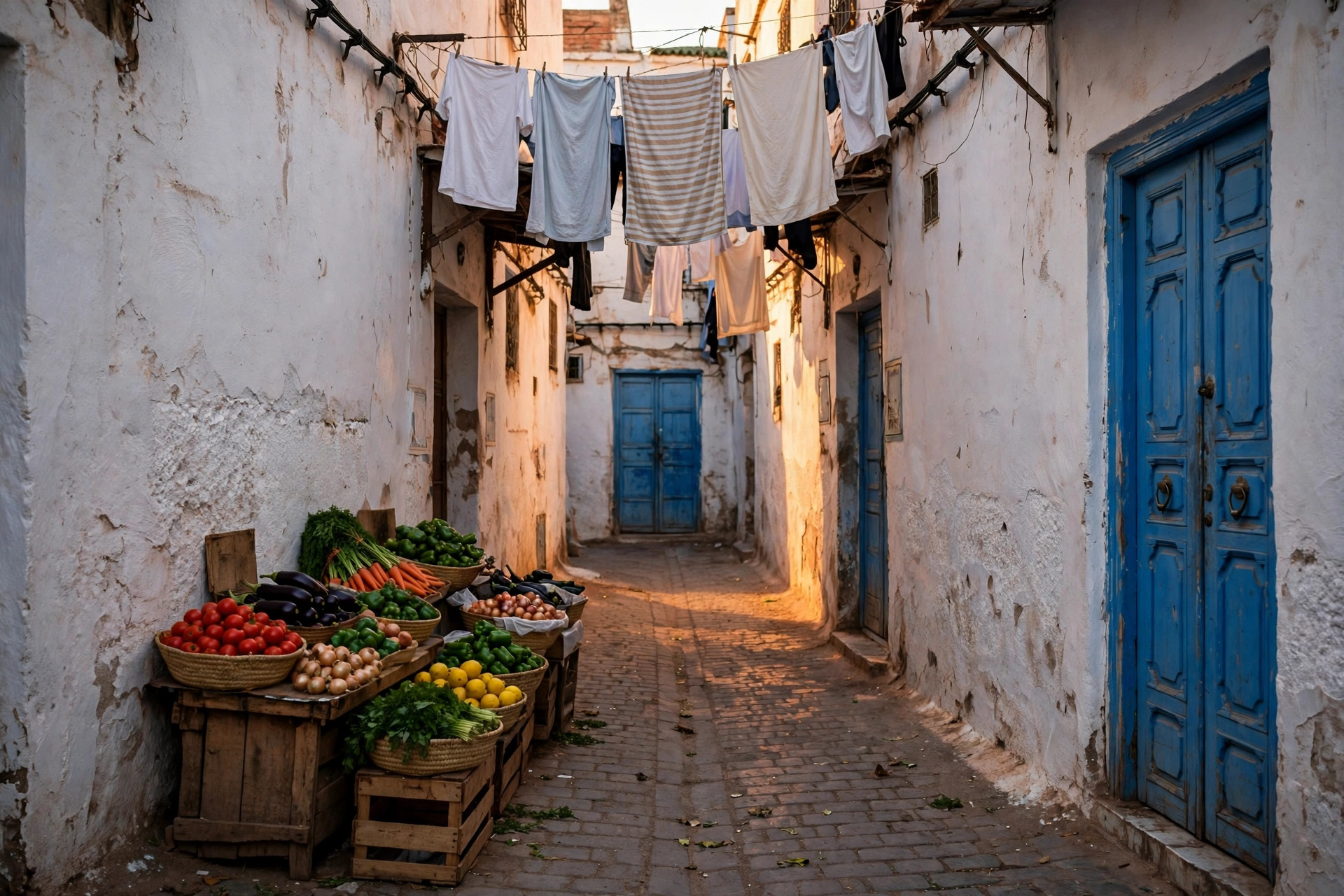
Food here is plain and generous: tagines, grilled sardines, harira and bread from the neighbourhood oven. A restaurant lunch costs 40–70 MAD and a mint tea 6–10 MAD. The Spanish cemetery above the town, where the French writer Jean Genet is buried, is a place to visit, and the view from its hill across the estuary is the best in town.
Weekends are for the ruins and the sea. Lixus sits about 3–5 kilometres north on a hill above the Loukkos, a Phoenician city from the 7th century BC that became a Roman colony in 42 AD, with mosaics, a theatre and fish-salting tanks. Living in larache means a quiet working week in a port town and a Roman city and a beach at the weekend.
Healthcare in Larache
Larache has local clinics, private practices and pharmacies for routine care, and a GP consultation runs 150–300 MAD. The town also has a provincial hospital for serious cases, so most expats living in larache do not need to travel to Tangier for hospital care. For specialist treatment, some expats still travel to Tangier, about ninety minutes by road.
Register with the CNSS if you are employed locally, and take out private health insurance as well: decent international cover costs roughly 300–800 MAD a month for a single person, and it gets you seen quickly in a private clinic. Pharmacies are plentiful, and most pharmacists speak French or Spanish. Bring your prescriptions and a French or Spanish translation of your medical history.
Schools for Expat Families
Families should plan schooling carefully: there is no large international school in Larache and no French AEFE school in town. Most expat families choose a local private school with French or Spanish teaching, and younger children pick up French and Arabic fast. Public schools are free but taught in Arabic, and nurseries are plentiful at 1,000–2,500 MAD a month. That gap is the main reason living in larache with school-age children needs a plan made before the move.
For older children who need an international curriculum, Larache is a harder choice: families either accept a French- or Spanish-language private school, look at boarding options in Tangier or Tetouan, or plan for home schooling. The town's Spanish heritage helps: children who already speak Spanish settle into school life faster here than anywhere else in Morocco.
The Downsides of Living in Larache
Honesty first: Larache is not for everyone. The expat community is tiny, and winter can feel lonely when the rain sets in and the town quiets down. If you need a buzzing social life in English, the town means making your own fun or taking the bus to Tangier, about an hour and a half away.
Services are limited: no coworking space, no big international supermarket, and no train station, so every trip to Rabat or Casablanca starts with a bus. Summer humidity is real, and the town has little shade outside the corniche and the squares. French, Spanish or Arabic is not optional here: daily life runs in all three, and English alone will leave you dependent on others for simple tasks.
Moving to Larache: Your First Steps
Start with a scouting trip: spend a week here, walk the corniche at sunset, visit Lixus in the morning and view three or four flats. Most expats decide within days whether living in larache suits them, and a week here costs less than a weekend in Tangier.
On paperwork, the standard path applies: enter on a 90-day tourist stamp, then apply for a carte de séjour at the police prefecture with your rental contract, bank statements and health insurance. Our Morocco carte de séjour renewal guide walks through the documents and the timeline. Open a bank account early and bring certified translations of key documents.
- Visit for a week and choose your neighbourhood.
- Secure a long-term rental with a written contract.
- Open a bank account and arrange health insurance.
- Apply for your carte de séjour within the first 90 days.
- Learn basic French, Spanish or Darija before you arrive if you can.
- Join the local expat and fishing-port networks once you land.
Frequently Asked Questions
Is Larache a good place for expats to live?
Yes, for the right expat. Larache suits remote workers, retirees and families who want low rents, sea air and a genuine Moroccan port town with a Roman ruin nearby. It is less suited to anyone who wants a large English-speaking social scene.
How much does it cost to live in Larache?
A single expat needs roughly 7,000–9,500 MAD a month, a couple 10,500–14,500 MAD, and a family of three 14,000–19,500 MAD, including rent. A one-bedroom flat costs 1,500–3,000 MAD depending on the area.
How do I get to Larache without a car?
By bus. CTM runs from Tangier in about an hour and a half for 48–85 MAD and from Rabat in about two and a half hours for roughly 90–140 MAD. There is no train station: the nearest rail hub is Ksar el-Kebir, about 30 kilometres inland.
What is the weather like in Larache?
Mild and Atlantic: August averages 24.2°C, January averages 12.4°C, and rain is about 700 mm a year, mostly from October to April. April to June and September to October are the best months, and summer humidity makes the heat feel stronger than the thermometer says.
Is Larache safe for foreigners?
Yes. Larache is a calm, family-oriented town with low street crime by Moroccan standards. Normal precautions apply: watch your bag at the bus station and the souk, and use registered taxis after dark.
Are there French or international schools in Larache?
No. There is no French AEFE school and no large international school in the town, so families use local private schools with French or Spanish teaching or look to Tangier and Tetouan. Nurseries cost 1,000–2,500 MAD a month.
Conclusion: Is Larache Right for You?
For expats who value price, sea air and Roman history over comfort and buzz, living in larache is the choice: a port town of 133,731 people with a Spanish ensanche from 1911–1956, rents from 1,830 MAD, a Roman city 3–5 kilometres north and a long Atlantic beach at the end of the street. It will not entertain you like Tangier or employ you like Casablanca, but it will give you a comfortable, affordable, genuinely Moroccan life at one of the lowest costs on the northern coast.
Visit for a week and test living in larache yourself: walk the corniche at sunset and visit Lixus in the morning. If the quiet feels like freedom rather than boredom, Larache is your town — and our Morocco in 25 days route is a good way to see the rest of the country first.
Last checked: November 2026
1 thought on “Living in Larache: Expat Life in Morocco’s Quiet Atlantic Port”