Living in Taza suits expats who want a real Moroccan town, mountain air and rents far below Fez — without giving up a train line, a hospital and a weekly souk. This small provincial capital sits in the narrow corridor between the Rif and the Middle Atlas, about 120 km east of Fez, and feels like a place people live in rather than visit. This guide covers living in Taza honestly: the two towns on two terraces, the rents, the schools, the trains and the trade-offs.
At its simplest, living in Taza means small-city prices, mountain weather and a slower daily rhythm: a provincial capital of about 150,000 people, with an old walled medina on a ridge and a modern lower town on the plain below.
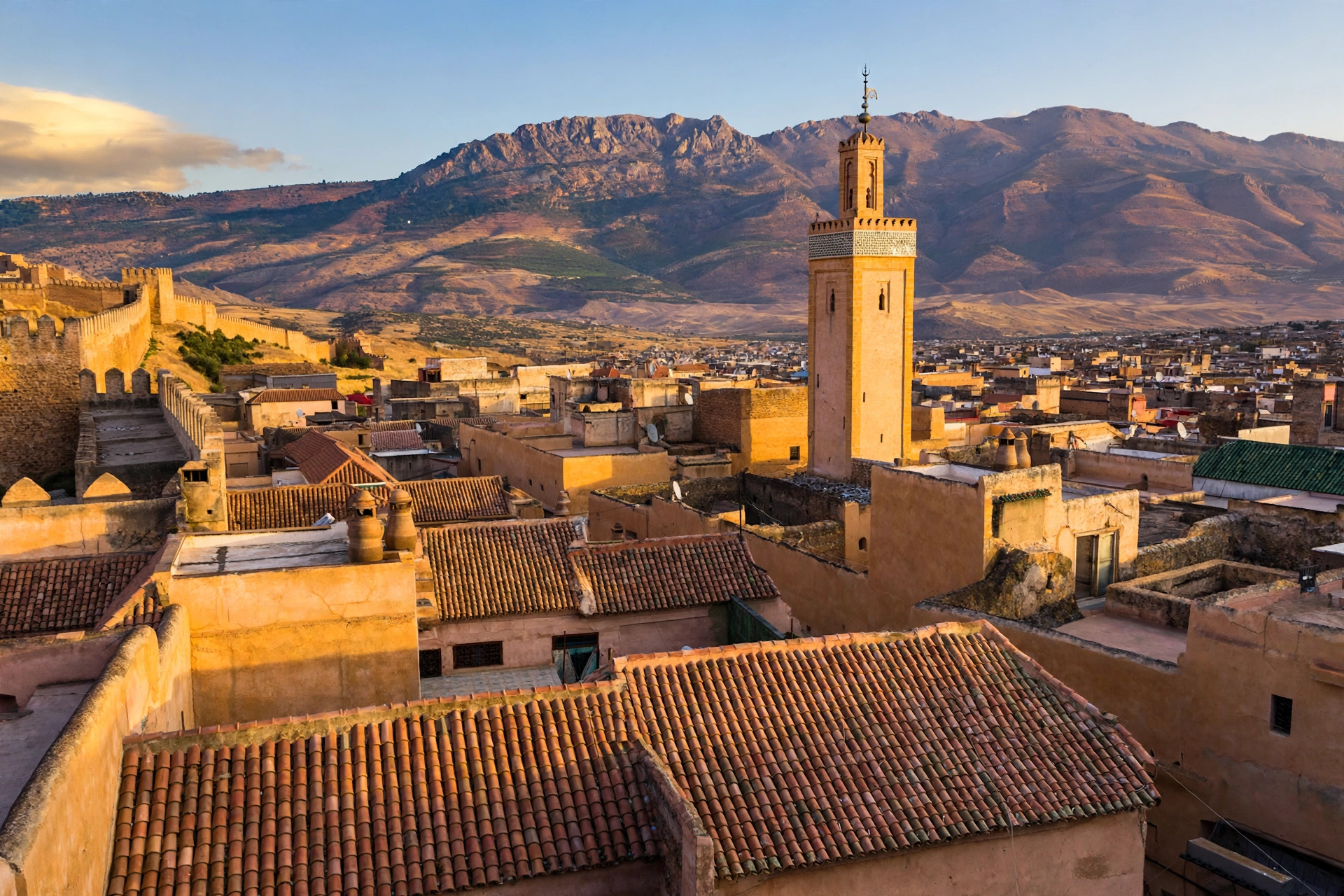
Living in Taza is compact enough to learn in a week. The medina, known as Taza-Haut, sits at about 585 metres above sea level behind its old walls, while the Ville Nouvelle, or Taza-Bas, spreads across the fertile plain at about 445 metres. A taxi or local bus connects the two in minutes, and most daily life happens in the lower town.
Fact
Detail
Population (2024 census)
150,763 (urban commune); 500,971 (province)
Location
About 120 km east of Fez; about 210 km west of Oujda; about 150 km south of Al Hoceima
Elevation
Old medina about 585 m; Ville Nouvelle about 445 m
Airport
Fez–Saïss (FEZ), about 130–140 km west, roughly 1.5–2 hours by road — check on arrival
Climate
Hot summers, cold wet winters; snow on nearby Jbel Tazekka in winter (approximate)
Checked November 2026.
Where Taza Sits — the Taza Gap Between Two Ranges
Taza exists because of a gap in the mountains. Here the Rif to the north and the Middle Atlas to the south almost meet, leaving a corridor a few kilometres wide — the Taza Gap — which for centuries was the most comfortable route between eastern Morocco and the Atlantic plains.
That geography still shapes daily life. Olive groves and farmland fill the valley below the old town, the road and the railway run east–west along the plain, and on a clear day you can see one range from the ramparts and the other from the lower town. Winters are colder and wetter than on the coast, summers are hot and dry, and the temperature can swing sharply between day and night.
A Short History: From a Mountain Pass to a Provincial Capital
Taza is one of Morocco’s oldest fortified towns, and its early history is honestly unsettled. Tradition credits a settlement here to the late 7th century, while archaeology in the caves nearby points to far earlier human presence, including Palaeolithic finds. Treat any single founding date you see online as unsettled rather than settled fact.
What is solid is the medieval record. The Almoravid ruler Youssef ibn Tashfin took the town in 1074, and the Almohad caliph Abd al-Mu’min conquered it in the early 1140s and ordered the Great Mosque built after 1142. That mosque is the oldest surviving example of Almohad architecture, enlarged by the Marinids in 1292–1293 and renovated under the Alaouite sultan Moulay Rashid in the 17th century.
In the 17th century Moulay Rashid used Taza as a base for his conquest of Fez. French troops occupied the town in 1914, and the lower town was laid out under the protectorate in the early 20th century — which is why Taza today is really two towns on two levels. Fez is about 120 km west, Oujda about 210 km east, and the A2 motorway and the N6 road both pass the town, so compare the pace with our guide to living in Fez as an expat before you decide which end of the line suits you. See the Taza article on Wikipedia for the fuller record.
Living in Taza: Neighbourhoods Worth Your Rent
Choosing where to live is the biggest decision, because the two halves of the town feel completely different — walk each area before signing anything.
The old medina, Taza-Haut, is the atmospheric choice: narrow lanes, the Great Mosque, the souks and the rampart walk with views over the valley. Flats here are older and often smaller, stairs are steep, and parking is scarce. It suits a single person or a couple who want character and do not mind climbing.
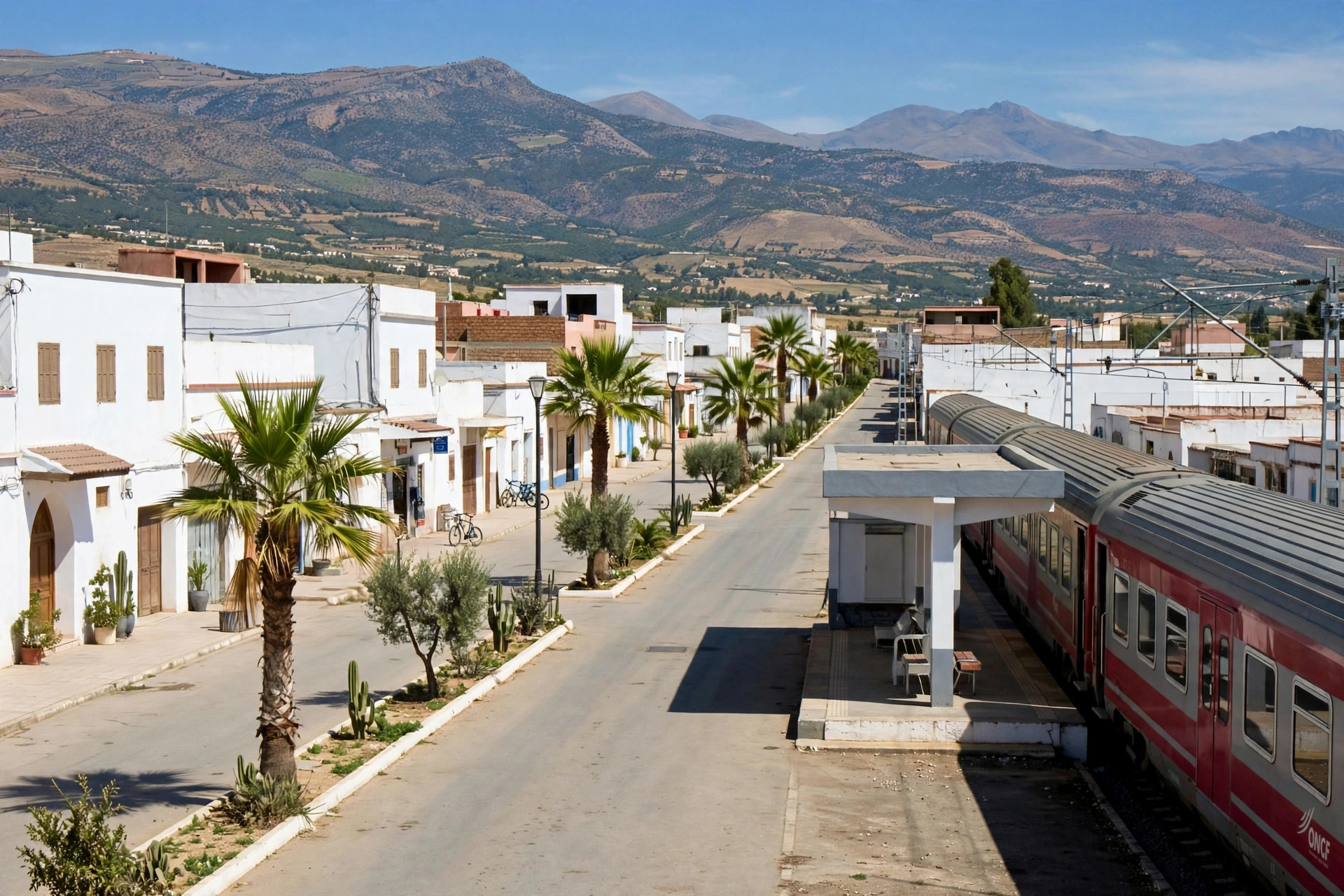
The Ville Nouvelle, Taza-Bas, is the practical choice for most newcomers. Its heart is the Place de l’Indépendance, with Avenue Mohammed V and Rue Allal Ben Abdullah running from it. Flats here are brighter and plainer, cafes and banks are on foot, and the station is a short taxi ride away.
Between the centre and the station, the districts of Bit Goulem, Ourida and Bin-Jradi grew in the 1960s and 1970s and are still lived-in, affordable and close to everything. North of the centre, the Massira districts, including Massira Al-Quds and the villa-style Massira II, grew from the 1980s onwards and feel more residential and spacious. El-Messaoudia, between the two towns, is another established residential area worth a look. Our guide to renting an apartment in Morocco explains deposits, contracts and agency fees before you commit.
Rents in Taza: What Your Money Buys
Rent is the strongest argument for living in Taza. No published rent survey covers the town, so treat the ranges below as planning estimates, not quoted listings — verify on arrival, and expect furnished flats to cost more.
A one-bedroom flat in the Ville Nouvelle typically runs 1,800–3,500 MAD a month, a two-bedroom 2,500–5,000 MAD, and a three-bedroom or small villa 4,000–8,000 MAD. In the medina, older flats can be cheaper still, while the villa-style streets of Massira II sit at the top of the range. For comparison, a one-bedroom in central Fez often costs what a two-bedroom costs here.
Area
1-bedroom (MAD/month)
2-bedroom (MAD/month)
3-bedroom / villa (MAD/month)
Ville Nouvelle / centre
2,000–3,500 ($200–$350)
2,800–5,000 ($280–$500)
4,500–8,000 ($450–$800)
Old medina (Taza-Haut)
1,500–2,800 ($150–$280)
2,200–4,000 ($220–$400)
3,500–6,000 ($350–$600)
Massira / Massira II
2,200–3,500 ($220–$350)
3,000–5,000 ($300–$500)
5,000–8,000+ ($500–$800+)
Bit Goulem / Ourida / station area
1,800–3,000 ($180–$300)
2,500–4,500 ($250–$450)
4,000–7,000 ($400–$700)
Indicative planning ranges, November 2026. Verify on arrival — no published Taza rent survey exists.
Deposits are usually one or two months’ rent, and agency fees about one month’s rent. Get the contract in writing, ask whether water and electricity are included — usually they are not — and test the water pressure, the heating and the internet in the actual flat before you sign. Winter heating matters here more than on the coast, so ask how the flat is heated.
The Monthly Budget: What a Couple Spends
For a couple, living in Taza on 8,500–13,500 MAD a month (about $850–$1,350), including rent, is comfortable. The saving against Fez comes almost entirely from housing; food, transport and services cost roughly the same as in other small Moroccan towns.
Groceries are the pleasant surprise: a weekly shop for two at the souks and supermarkets rarely passes 600–700 MAD, and the weekly souk is still a real market rather than a tourist show.
Item
Monthly cost (MAD)
Monthly cost (USD)
Rent, furnished 2-bedroom in the Ville Nouvelle
2,500–4,500
$250–$450
Groceries and household
2,400–3,200
$240–$320
Utilities (water, electricity, heating in winter)
500–1,000
$50–$100
Internet (fibre) + two mobile plans
400–600
$40–$60
Transport (taxis, train trips, fuel)
400–800
$40–$80
Eating out and cafes
800–1,200
$80–$120
Health, pharmacy and insurance share
700–1,200
$70–$120
Total
8,500–13,500
$850–$1,350
November 2026 estimates. Verify on arrival.
A single person can live well on 5,500–8,500 MAD a month, and a family with children should budget from about 12,000 MAD. For a wider comparison, see our guide to the cost of living in Morocco’s small towns.
Getting Around: Trains, Taxis and the Road to Fez
Transport is the part of living in Taza that works best. Taza station sits on the Fez–Oujda line in the lower town, a few kilometres below the medina, and a new station building was inaugurated in September 2025 as part of a modernisation programme. The high-speed Al Boraq does not stop in Taza — services here are conventional ONCF trains — so plan on the slower, cheaper railway.
Trains run several times a day in both directions. The ride to Fez takes about 2–2.5 hours, and the full Fez–Oujda journey takes about 5–5.5 hours, with second class on that full route costing about 130 MAD. Check live times and fares on the ONCF booking site before you travel, as timetables change and delays of 10–30 minutes are not unusual on this line.
Inside the town, petit taxis are cheap — usually 7–15 MAD for a short trip — and the medina and the lower town are connected by taxi and local bus. A car is useful but not essential at first: the lower town is walkable, and grand taxis and buses cover the surrounding villages. The A2 motorway puts Fez about 1.5 hours away by car, and Fez–Saïss airport about 1.5–2 hours. For remote work, fibre is available in newer buildings from around 249 MAD a month nationally — test the connection in the actual flat with a real video call before signing a lease, as speeds vary street by street. No coworking space inside Taza itself could be confirmed, so most remote workers here work from home or from a regular cafe.
Living in Taza with Children: Schools and Family Life
Families considering living in Taza need one honest fact first: no English-language international school inside the town itself could be confirmed. Local public and private schools teach in Arabic and French, and that is the realistic option for children who will settle here long term.
Most expat families who want English-language schooling look to Fez, about 2–2.5 hours away by train — too far for a daily school run. Before choosing, visit the schools in person, ask about levels and admissions directly, and sort out residence paperwork early; children need their own file. Our guide to moving to Morocco, visas and the carte de séjour walks through the process.
Day to day, living in Taza with children is easy: safe streets, a compact town, mountain air, and family-sized flats with space to spare. The trade-off is that organised children’s activities in English are thin on the ground; most run in French or Arabic, and teenagers may find the town quiet.
Healthcare: Clinics in Town, Hospitals in Fez
Healthcare in Taza covers the everyday well and the serious less so. The town has a public hospital, Ibn Baja Hospital, plus private clinics, pharmacies and laboratories for routine care, minor emergencies and maternity. Ask locally on arrival which departments and specialists are actually staffed, as services change.
For anything complex, the major hospitals are in Fez, about 2–2.5 hours away by train or 1.5 hours by car: the university hospital there and the private clinics of the city. English-speaking doctors are easier to find in Fez, so many expats register with a GP there and use Taza only for prescriptions and minor visits. For the full overview, see our guide to healthcare in Morocco for expats.
Keep a small pharmacy kit at home and carry health insurance that covers private care in Fez. French or Arabic is the working language in clinics throughout.
Everyday Life: Tazekka, Caves, Food and the Honest Downsides
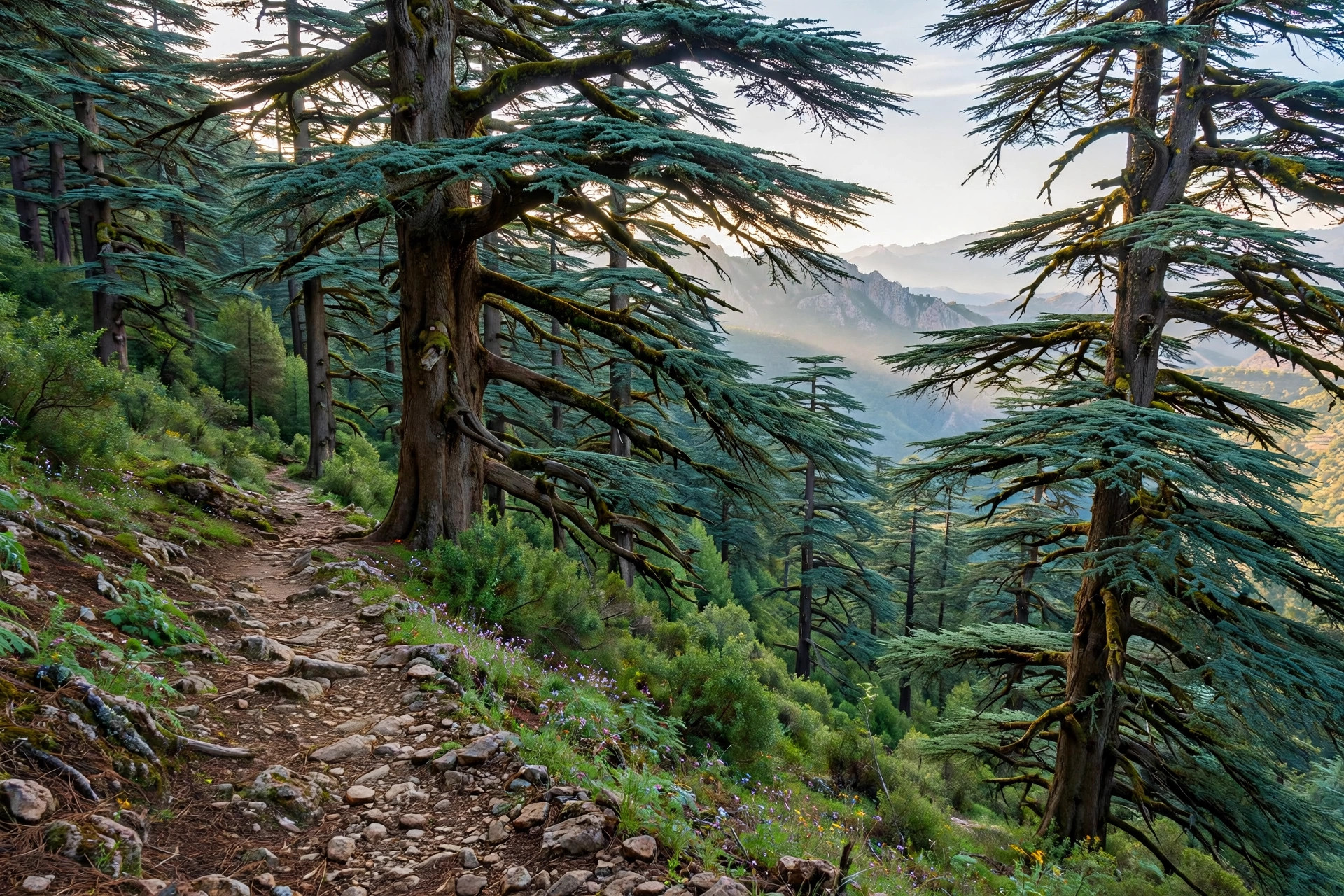
The best reason to choose living in Taza is the weekend. Half an hour south of town the road climbs into Tazekka National Park, created in 1950 and extended in 1989 to about 120 sq km of cedar, cork oak and holm oak forest around Jbel Tazekka, at 1,980 metres. The park’s most famous feature is the Friouato cave, about 30 km south of town near Bab Bou Idir, one of the deepest cave systems in Africa at about 270 metres deep. It reopened to guided visits on 27 July 2026 after a decade closed following a fatal rockfall in 2016 — check current access and entry fees before you go, and do not descend without a guide.
Food is simple and local: tagines, grilled meats, bread from neighbourhood ovens, olives and olive oil from the surrounding groves, and mint tea in the cafes. There is no international restaurant scene, and English menus are rare — French or Arabic carries the day.
The downsides of living in Taza are real but manageable. The expat scene is tiny: few foreign residents, no real nightlife, and a foreign community you can count in dozens. Summers are hot, winters are cold and damp, and heating bills surprise newcomers. French or Arabic is not optional; English alone goes only so far. Set against that, the pleasures are everyday ones: a rampart walk at sunset, a morning in the cedar forest, a cave visit, and a town where the rent leaves money for travel.
Frequently Asked Questions
Is living in Taza cheaper than living in Fez?
Yes, mainly on rent. A two-bedroom flat in Taza’s Ville Nouvelle typically runs 2,500–5,000 MAD a month, while a similar flat in Fez costs noticeably more. Food and services cost roughly the same, so the saving from living in Taza is mostly in housing.
Can I commute to Fez by train?
You can, but it is a long day. The train takes about 2–2.5 hours each way, with several departures a day, so a daily commute means four to five hours of travel. Most people who work in Fez visit for a day or two a week rather than commuting daily.
Is Taza safe for expats?
Taza is generally safe, and most expats feel comfortable walking around in the daytime, including in the medina and around the Place de l’Indépendance in the evening. Watch for pickpockets in crowded souks, avoid poorly lit lanes late at night, and keep valuables out of sight.
Are there international schools in Taza?
No English-language international school inside the town itself could be confirmed. Local schools teach in Arabic and French. Families wanting English-language schooling usually look to Fez, which is too far for a daily school run.
When is the best time to move to Taza?
Spring (March to May) or autumn (September to November) are the kindest months to start living in Taza: mild days, green hills and comfortable hiking in Tazekka. Summer is hot and dry, and winter brings cold, rain and snow on Jbel Tazekka, so avoid moving in the depths of either season if you can.
Do I need a car in Taza?
No, not at first. The lower town is walkable, petit taxis are cheap, and the train serves Fez and Oujda. A car helps for reaching Tazekka National Park, the Friouato cave and the surrounding villages, and for winter trips when the mountain roads need care.
Conclusion: Is Living in Taza Right for You?
Living in Taza suits a particular kind of expat: someone who wants a real Moroccan town between two mountain ranges, a rent that leaves money for travel, and weekends in cedar forest and caves — and who does not need a buzzing expat scene or English on every menu. If you need an international school nearby, a lively nightlife and a large foreign community, Fez will serve you better, and our guide to living in Fez as an expat can help you compare.
But if you can live in French or Arabic, work from home or near the station, and enjoy a small provincial capital that is cheaper, calmer and closer to the mountains than its famous neighbours, living in Taza is one of the best-value moves in northern Morocco. Come for a week first, and price a flat in the Ville Nouvelle.