
Introduction: The Town the Guidebooks Forgot
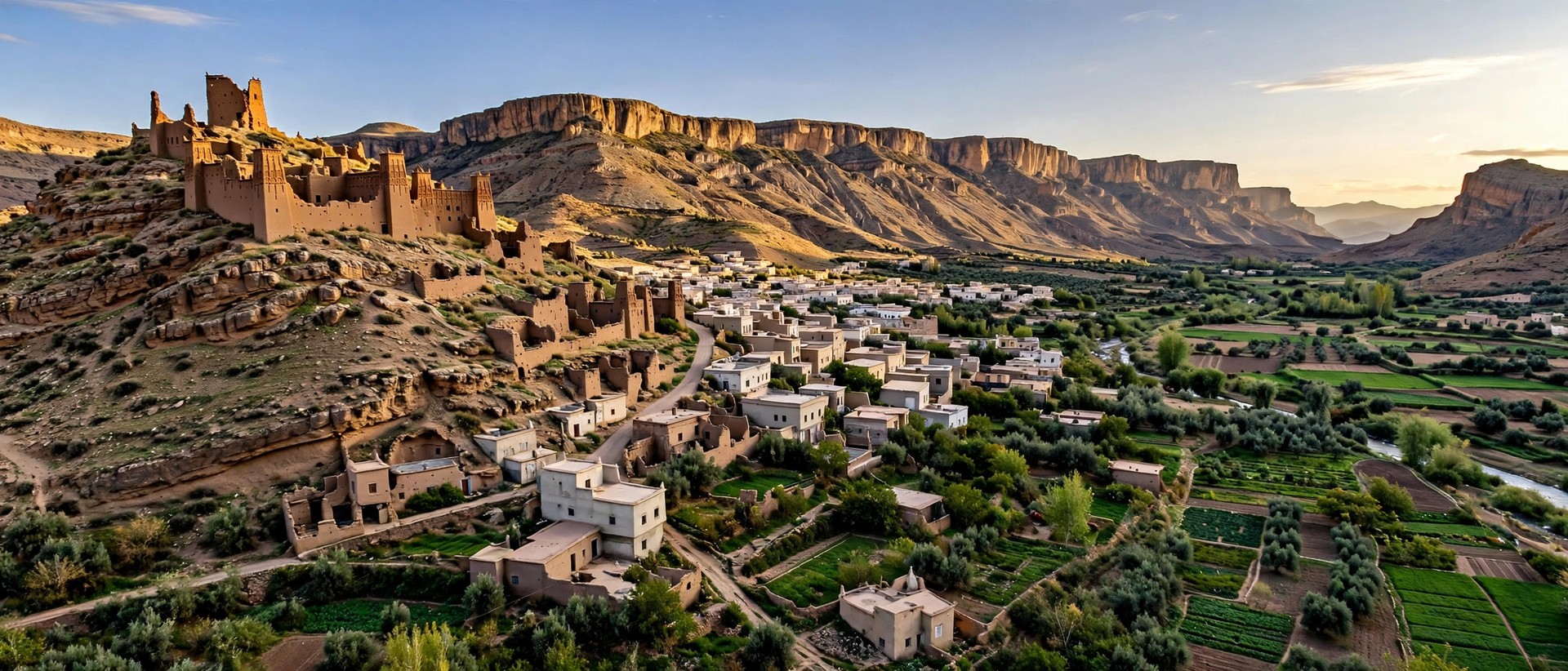
This debdou travel guide begins with an honest warning: almost nobody comes here. Debdou is a town of about 4,500 people in the hills of eastern Morocco, fifty kilometres south of Taourirt, with one main street, a ruined fortress above the roofs, and a past larger than itself. Most travellers cross the east between Fes and Oujda and never turn off. That is exactly why you should.
Debdou rewards the detour twice over. For a little over a century it was the capital of its own small mountain state, and for much longer one of Morocco's great Jewish towns — a centre of learning that sent rabbis to cities across the country. This debdou travel guide covers the history, the sights, the practical details and the costs, so you can plan a day here without surprises.
For the wider context of the country, start with our history of Morocco.
In this guide
- Debdou Travel Guide at a Glance
- Where Is Debdou?
- A Little History: A Principality in the Mountains
- The City of Priests: Debdou's Jewish Heritage
- What the Records Do Not Tell Us
- The Marinid Kasbah and the View
- The Kiadid Quarter: Doors of Debdou
- The Mellah: Walking the Old Jewish Quarter
- Aïn Tafrant: The Spring That Feeds the Town
- The Wednesday Souk
- Getting to Debdou
- Where to Stay: Base Yourself in Taourirt or Oujda
- What to Eat in Debdou and the Oriental
- Practical Tips for Visiting Debdou
- Best Time to Visit Debdou
- Frequently Asked Questions
- Conclusion: Why Debdou Is Worth the Detour
Debdou Travel Guide at a Glance
The essentials in this debdou travel guide, at a glance:
| Fact | Detail |
|---|---|
| Location | Taourirt Province, Oriental region, eastern Morocco |
| Coordinates | 33°59′ N, 3°03′ W |
| Elevation | About 950–1,000 metres |
| Population | 4,447 (2024 census) |
| Distance from Taourirt | About 50–53 km, 45 minutes to 1 hour by road |
| Distance from Oujda | About 150–160 km, 2 to 2.5 hours by road |
| Market day | Wednesday |
| Best months | March to May, late September to early November |
| How long to stay | Half a day to a full day, as a day trip |
Where Is Debdou?
Debdou sits at around 950 metres in a valley below a long rocky escarpment in Taourirt Province, in Morocco's Oriental region. The town is small: a few thousand inhabitants, one main street, orchards and gardens fed by springs, forested hills on either side. The nearest city of any size is Taourirt, the provincial capital, about 50 kilometres north on the Fes–Oujda road and railway; Oujda lies about 150 kilometres to the north-east.
The setting shapes everything about a visit: Debdou is not on the way to anywhere else, so nobody passes through by accident. That isolation protected the town's character for centuries — and it is the reason this debdou travel guide treats the place as a day trip rather than a base.
A Little History: A Principality in the Mountains
Debdou's great moment came in the fifteenth century. From about 1430 until 1563, the Ait Ourtajjen — an Amazigh family connected to the Wattasid dynasty then ruling Morocco — governed here as a semi-independent principality. The fortress above the town, built in the Marinid period, is the physical reminder of those years, and has been the subject of archaeological work in recent times.
Before the principality, Debdou was already a frontier town, guarding the routes between the Moulouya valley and the high steppe; after 1563 it slipped back into quiet obscurity, a farming and market town of the eastern hills. That is the first half of the story this debdou travel guide tells: a mountain principality that lasted 133 years, then vanished into the hills.
The City of Priests: Debdou's Jewish Heritage
The other history of Debdou is older and, in its way, even more striking. Jewish families settled here over many centuries. Tradition holds that the Cohen-Scali clan arrived from Sicily as early as the eleventh century, followed by Sephardi families from Seville after the persecutions of 1391 and the expulsion from Spain in 1492. Their surnames — Cohen-Scali, Murciano, Benhamou, Bensussan, Benaim, Morali — belong to Debdou as much as its stones do.
By the nineteenth century Jews made up the large majority of the population — about 2,000 inhabitants at the end of the century, most of them Jewish — and rivalry between the leading families is said to have produced seventeen synagogues in this small town. Debdou became known across Morocco as a centre of religious learning, exporting rabbis to cities all over the country, and earned the Hebrew name Ir ha-Kohanim, the City of Priests, for its many households claiming descent from the priestly Cohanim.
Then came the twentieth century: families moved to the coastal cities under the French Protectorate, and after the 1950s and 1960s the community emigrated, mostly to Israel; the last households left the mellah by the 1970s. Descendants still return for pilgrimages to the tombs of venerated rabbis, and in 2025 the World Monuments Fund put the Jewish Heritage of Debdou on its World Monuments Watch, working with the Fondation du Patrimoine Culturel Judéo-Marocain and UNESCO to document the mellah and plan an interpretation centre. The story is told in more depth on the World Monuments Fund project page. That is why this debdou travel guide spends a full section on the mellah and the cemeteries below.
What the Records Do Not Tell Us
A debdou travel guide has to be honest about what is not settled. The eleventh-century arrival of the Cohen-Scali clan is family tradition, not documented fact — the firm record of a Jewish community begins with the Sephardi arrivals after 1391. The famous count of seventeen synagogues is a claim repeated in local memory and travel writing; the World Monuments Fund counts twelve synagogues and a yeshiva still standing — a different measure, buildings surviving, not buildings remembered.
The old Jewish cemetery is sometimes described as more than 900 years old, but no published source pins down its earliest graves. Even the town's elevation is given as about 950 metres in some guides and about 1,000 in others, and the road distance from Taourirt as 50 or 53 kilometres depending on the source. Where this guide gives a range, the range is the honest answer.
The Marinid Kasbah and the View
The ruined fortress stands above the houses on the slope behind the town, and the climb is the best sight in Debdou. No debdou travel guide is complete without it. The walk up is short but steep and uneven, on loose stone rather than steps, with no railing. If that is too much, ask a driver to take you as high as the track allows and enjoy the view from there.
From the kasbah, the whole settlement lies below you: pale walls against green gardens, the cliff beyond, the valley opening to the steppe. Come in the early morning or late afternoon, when the light is low and the stone turns gold. There is no ticket and no opening hour, but go with a local contact if you can, for the route and the stories attached to the stones.
The Kiadid Quarter: Doors of Debdou
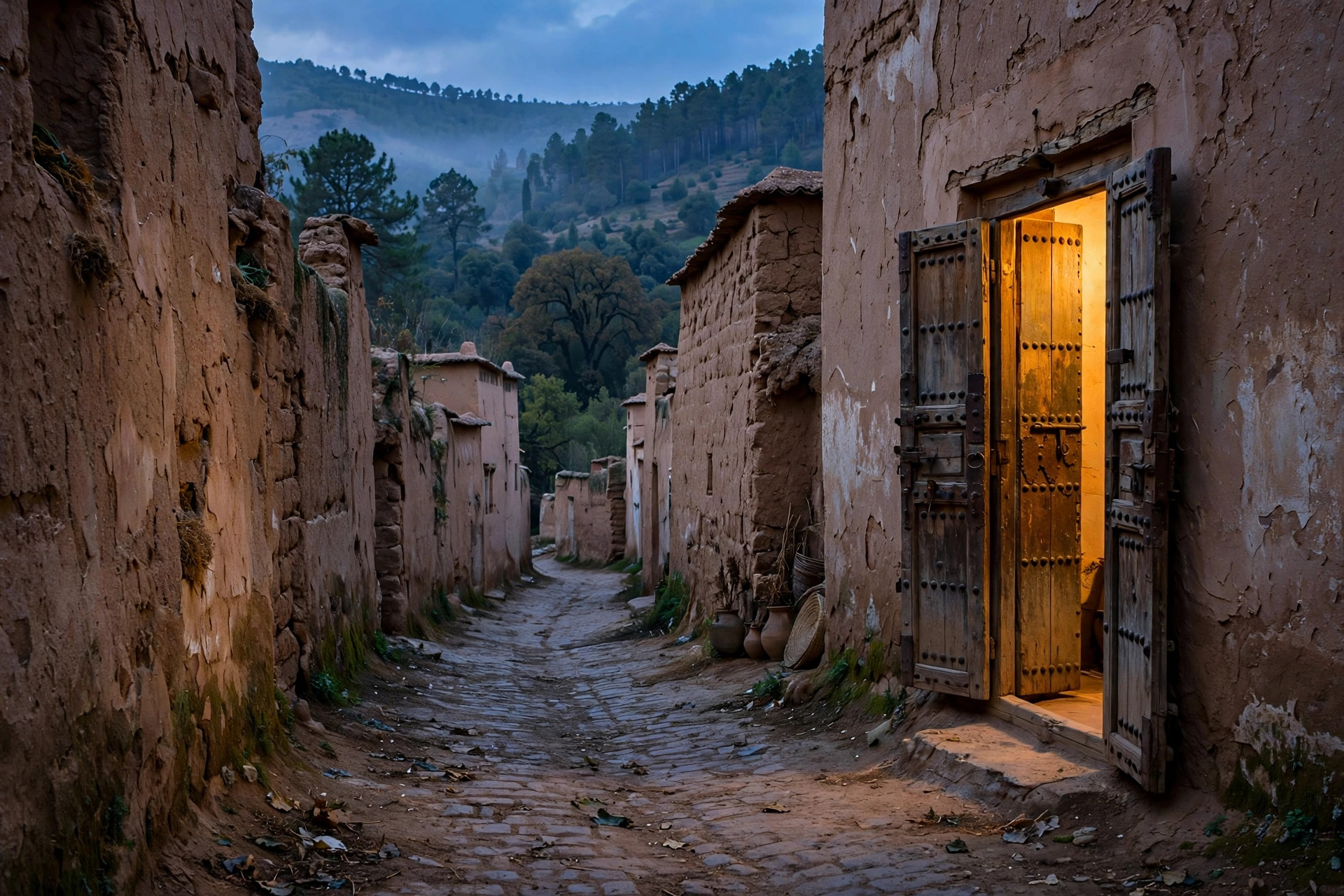
The old district of Kiadid is the town's most atmospheric corner: narrow lanes, whitewashed and ochre walls, and the old wooden doors Debdou is known for, studded and carved. Walk slowly — the lanes are level in places and sloping in others, paving is patchy, and proper shoes matter. Bring this debdou travel guide with you and take your time; the quarter rewards patience, not speed.
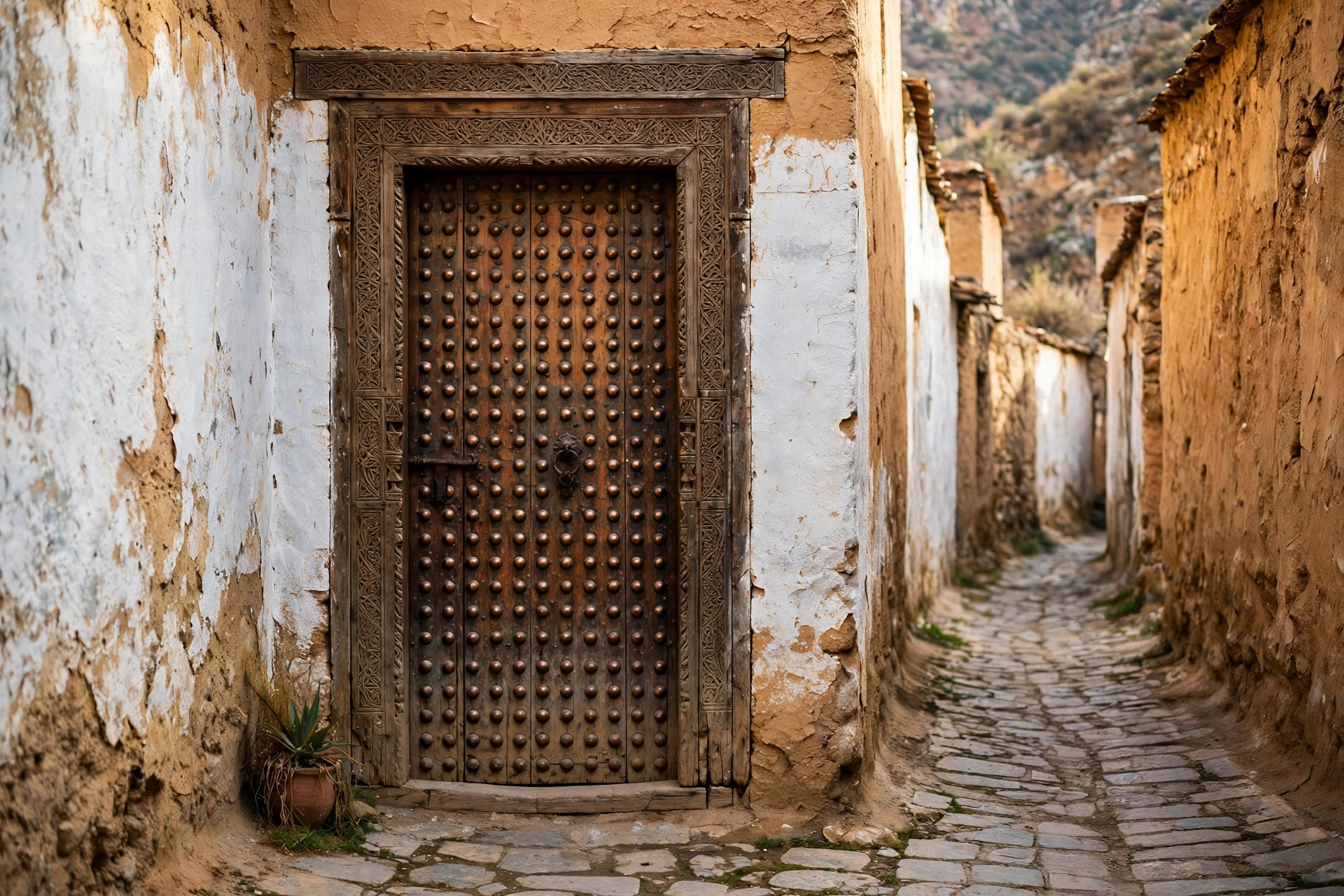
Kiadid is not a museum. People live here, hang laundry here, and keep their doors closed against the afternoon sun. The pleasure of this quarter is the accumulation of small things — a carved lintel, a blue-painted step, a cat asleep in a patch of sun — in lanes where almost no tourist has walked before you.
The Mellah: Walking the Old Jewish Quarter
The former Jewish quarter is still legible in the street pattern, though the synagogues have largely gone or been absorbed into other buildings. Two Jewish burial grounds survive — a very old one on the hillside and a twentieth-century one — and the tombs of revered rabbis remain pilgrimage sites.
Visit respectfully. Access to some sites depends on finding the keyholder — one more reason to come with a local contact. The mellah is the heart of this debdou travel guide because it is the reason the town matters beyond its own valley: for six centuries, this small quarter was one of the great centres of Moroccan Jewish life. More background is on Wikipedia's Debdou page.
Aïn Tafrant: The Spring That Feeds the Town
The spring of Aïn Tafrant supplies the town's water and is well known across Morocco. Every debdou travel guide mentions the spring, and for good reason: the ground above it gives a classic view back across Debdou, with the kasbah on the left — an easy objective for a short outing.
Springs are the reason Debdou exists where it does: in a dry, high landscape, reliable water meant gardens, orchards and a town that could feed itself.
The Wednesday Souk
The weekly market falls on Wednesday, drawing people from the surrounding countryside for vegetables, household goods and livestock. If your dates are flexible, this is the day to be here — the town at its liveliest, and the best reason to time your visit mid-week.
The souk is also the best place to eat simply: a tagine at a roadside grill, skewers of lamb, bread from a neighbourhood oven, mint tea in a café where everyone will want to know where you are from.
Getting to Debdou
There is no railway station in Debdou, and no direct bus from the big cities. You get here by road, almost always through Taourirt, on the Fes–Oujda railway and the main road. This debdou travel guide assumes you arrive with a car, a hired driver, or a grand taxi — there is no public transport inside the town.
| Route | Distance | Time | Notes |
|---|---|---|---|
| Taourirt → Debdou | About 50–53 km | 45 minutes to 1 hour | Quiet mountain road; grand taxi or hired car |
| Oujda → Debdou | About 150–160 km | 2 to 2.5 hours | Via Taourirt; allow more in summer heat |
| Fes → Taourirt | About 300 km | 4 to 4.5 hours | Train or motorway, then road to Debdou |
| Oujda Angad Airport (OUD) → Debdou | About 160 km | 2 to 2.5 hours | Nearest airport; car hire at the airport |
A shared grand taxi from Taourirt costs roughly 30–50 MAD (about $3–$5) per seat — an estimate, so agree the fare first. A car with a driver for the day costs roughly 500–800 MAD (about $50–$80) — also an estimate, worth arranging the day before. Diesel costs about 16.30–16.90 MAD per litre (about $1.63–$1.69) as of November 2026. If you are driving yourself, our driving in Morocco guide covers rental cars, road rules and mountain driving.
Where to Stay: Base Yourself in Taourirt or Oujda
The first rule of this debdou travel guide is simple: do not plan to sleep in Debdou. The town has very little tourist accommodation — do not count on finding a comfortable hotel room here — and no reliable choice of restaurants. Treat it as a day visit; sleep in a larger town and drive in.
| Base | Distance to Debdou | Hotel price (per night) | Best for |
|---|---|---|---|
| Taourirt | About 50 km, under 1 hour | 200–450 MAD (about $20–$45) | Closest base; railway station; simple hotels |
| Oujda | About 150 km, 2–2.5 hours | 350–650 MAD (about $35–$65) | Widest choice; airport; a city in its own right |
| Guercif | About 140 km, about 2 hours | 200–400 MAD (about $20–$40) | Stop on the railway line between Fes and Oujda |
Hotel prices are estimates for a standard double room, checked November 2026 — confirm on arrival. Our preferred plan: two or three nights in Oujda, with one full day in Debdou by hired car or arranged taxi. Travellers crossing the east often combine Debdou with our Figuig travel guide and the Taza travel guide. For the wider region, see our Morocco road trip guide and the best time to visit Morocco.
What to Eat in Debdou and the Oriental
Eating well is the easiest part of this debdou travel guide. Debdou itself will give you simple, honest food: a tagine at a roadside grill for about 30–60 MAD (about $3–$6), skewers of lamb, bread from a neighbourhood oven for 1–2 MAD, and mint tea for about 5–10 MAD (about $0.50–$1). Prices are estimates, checked November 2026.
For the real cooking of the Oriental region, save an appetite for Oujda. Look out for karane, a baked chickpea-flour cake sold by the slice in bread with cumin and salt — a street-food institution in the east of Morocco, a legacy of the region's Andalusian, Jewish and Amazigh kitchens. Kefta mcharmla, spiced lamb meatballs, is another regional standard, and the grills turn out excellent kebab and merguez. For something sweeter, the almond pastries called kaâb el ghzal and date-filled makrout belong to the same inheritance. Eastern Moroccan cooking can be generously spiced with cumin and chilli — if that does not suit you, say so when you order.
Practical Tips for Visiting Debdou
The practical half of this debdou travel guide is short, because the town is simple — but it matters.
- Come by car with a driver. There is no public transport within the town and distances between the sights are awkward on foot. A car and driver hired for the day from Taourirt or Oujda will make this trip comfortable.
- Bring cash in dirhams. Withdraw what you need in Taourirt or Oujda — do not expect to pay by card anywhere in Debdou. A day's food, fares and small purchases rarely exceed 200–300 MAD (about $20–$30) per person.
- Expect slopes, not stairs. The town is built on a valley side: streets tilt, surfaces are uneven, and some lanes are cobbled or unpaved. Walking poles help; wheeled luggage does not.
- The kasbah is optional: the climb is steep and rough with no handrails, and the views from the road and from near Aïn Tafrant are almost as good and far easier.
- Plan around the heat. Summers here are hot and the light is fierce. Visit the outdoor sights before about 11am and carry more water than you think you need — there are few places to buy a cold drink.
- Winter nights are genuinely cold — bring a warm layer between December and February, even if the days are sunny.
- Facilities are basic. Public toilets and cafés are limited — use what is available in Taourirt on the way in and out.
- Ask before photographing people and dress modestly — this is a small, traditional town where visitors are a novelty. For safety context across the country, read is Morocco safe?.
Best Time to Visit Debdou
The best months are March to May and late September to early November, when daytime temperatures are pleasant, roughly 20–29°C, and the light is kind to stone. Summer is hot and dry, with highs reaching 36°C and beyond, and the altitude does little to soften it. Winter days are mild and sunny, around 15–20°C, but nights at 950 metres are genuinely cold.
Spring has one extra advantage: the gardens are green, the orchards in flower, and the Wednesday souk at its fullest after the winter rains. If you can only pick one month, choose April or October. This debdou travel guide was written for those two windows — and for the traveller who would rather have a quiet town to themselves than a perfect forecast.
Frequently Asked Questions
Is Debdou worth visiting?
Yes — if you are already travelling in eastern Morocco. Debdou is no substitute for Fes or Chefchaouen, and nobody should fly to Morocco for it alone. But as a day trip from Oujda or Taourirt, it offers something increasingly rare: real history and no tourism at all.
How do I get to Debdou without a car?
Take the train on the Fes–Oujda line to Taourirt, then a shared grand taxi or pre-arranged car for the last 50 kilometres. Allow a full day for the round trip, and arrange your return transport before you leave Taourirt.
Can I stay overnight in Debdou?
In practice, no. There is no reliable hotel in the town, so plan to sleep in Taourirt or Oujda — prices start at about 200 MAD per night.
What is Debdou famous for?
Two things: the Ait Ourtajjen principality that ruled here from about 1430 to 1563, and the Jewish community that made Debdou one of Morocco's great centres of learning — the "City of Priests" — for over five centuries. The Marinid kasbah and the mellah are where both stories are still visible.
Is Debdou safe for tourists?
Yes. Debdou is a quiet, traditional farming town, and visitors are welcomed with curiosity, not hassle. Dress modestly, ask before photographing people, and keep to the main lanes after dark. Our is Morocco safe guide has the country-wide picture.
When is the weekly market in Debdou?
On Wednesday. The souk draws farmers and traders from the surrounding countryside — the liveliest day of the week, so plan your visit around it if your dates are flexible.
Conclusion: Why Debdou Is Worth the Detour
Debdou is not a destination that shouts. It is a small town under a cliff in eastern Morocco, with a ruined fortress, a famous spring, and lanes where seventeen synagogues once stood. You will not queue for anything, and you will be greeted in the street. You will stand by a spring that Moroccans know by name, look across a valley of gardens at a Marinid ruin, and walk lanes where rabbis once argued the law. That is the point of this debdou travel guide: a place this small should not be this memorable — and yet it is.
Go in spring or autumn, go with a driver, and keep the walking gentle. This debdou travel guide ends where the trip should begin: at the turn-off south of Taourirt, on a quiet mountain road, heading for a town the guidebooks forgot — and remembering everything. LahbabiGuide is written by travellers who live in Morocco — more about us on our about page. For the rest of the region, browse our Morocco travel guides.