
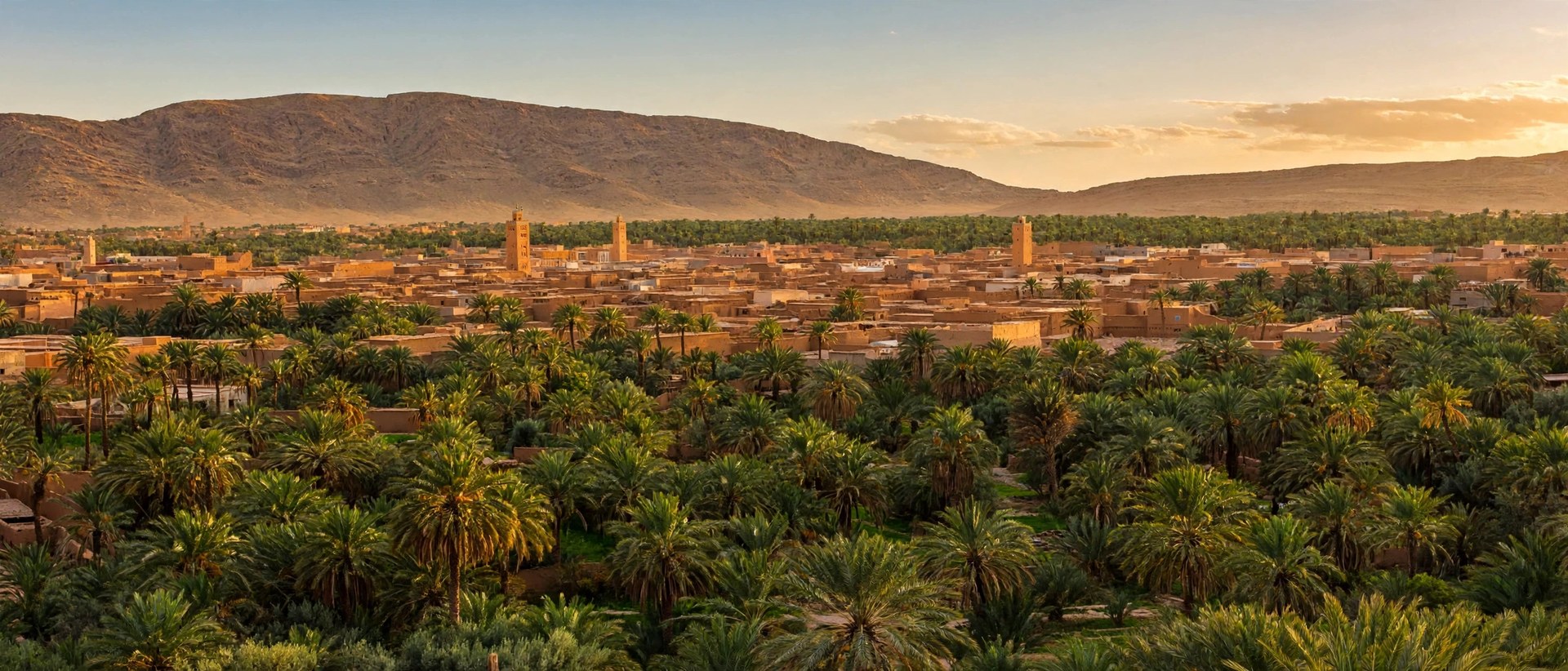
Figuig is the Morocco most travellers never reach, and this figuig travel guide exists because the journey is the point. On the Algerian border in the far east, the oasis sits roughly 370 kilometres south of Oujda. Seven fortified ksour stand around a palm grove of some 200,000 date palms, watered by ancient channels.
Figuig rewards slow travel. This figuig travel guide covers the history, the ksour, getting there, and what it costs.
In this guide
- Figuig at a Glance
- Where Is Figuig?
- A Short History of the Oasis
- The Seven Ksour
- The Palm Grove and Its Water
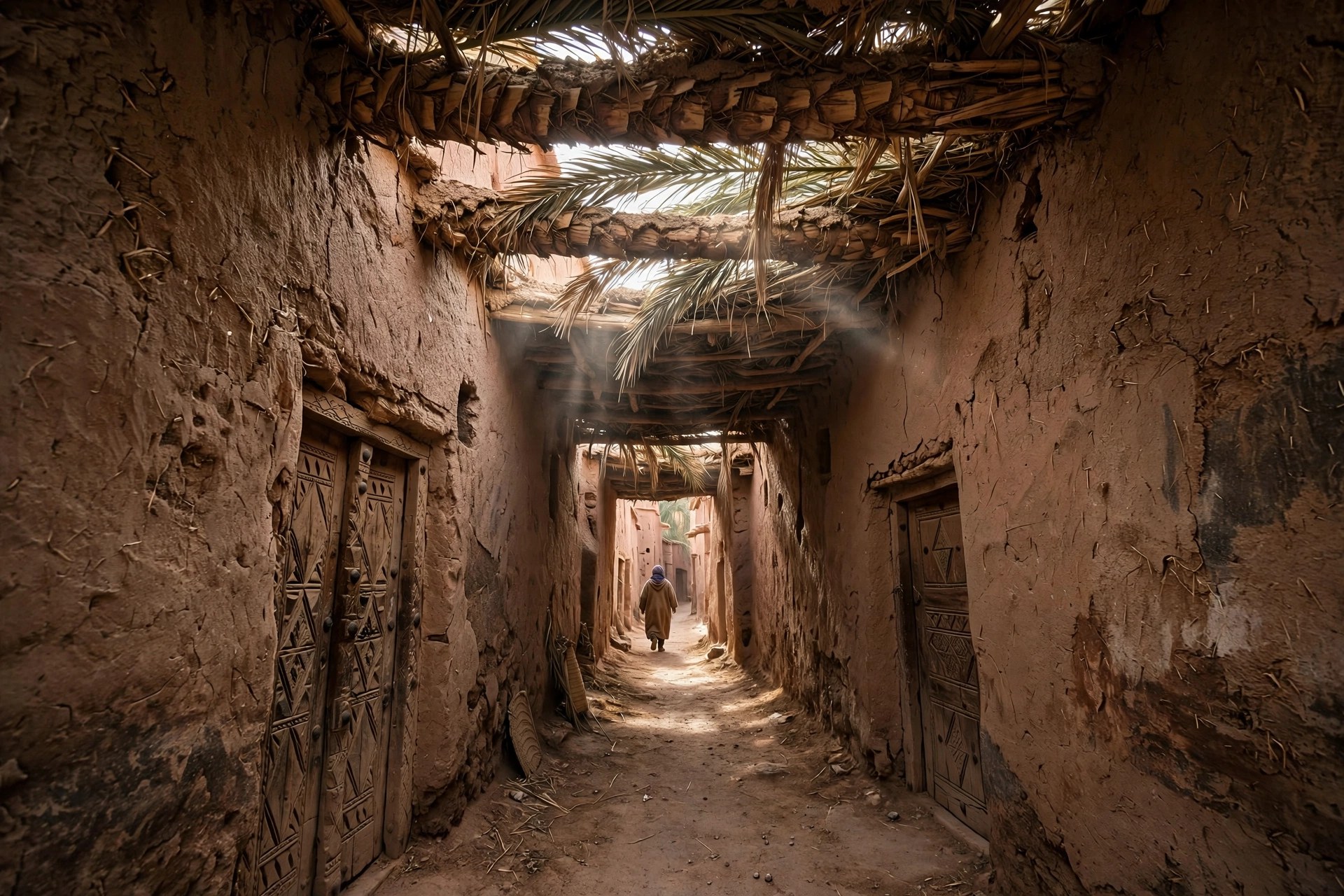
- Ksar Architecture and Covered Lanes
- Hammams and Hot Springs
- How to Get to Figuig
- Where to Stay in Figuig
- What to Eat in Figuig
- Best Time to Visit Figuig
- A Suggested Two-Day Figuig Travel Guide Itinerary
- Day Trips and the Road Beyond
- Practical Tips for the Border Zone
- How Much Does a Figuig Trip Cost?
- Frequently Asked Questions
- Conclusion
Figuig at a Glance
Figuig is a small oasis town in Figuig Province, a few kilometres from the Algerian border. Seven mud-brick ksour stand in 12 square kilometres of palm grove.
| Fact | Detail |
|---|---|
| Location | Figuig Province, Oriental region, eastern Morocco, about 900 m altitude |
| Distance from Oujda | About 370–385 km by road (N17) |
| Distance from the border | About 5 km; Beni Ounif, 7 km away |
| Palm grove | About 190,000–200,000 date palms, about 12 km² |
| Nearest airport / train | Oujda Angad, 370 km; no train serves Figuig |
Where Is Figuig?
Figuig sits in a pocket of the Algerian border, where Morocco meets the Sahara. The border has been closed since 1994, and Beni Ounif, Algeria, lies a few kilometres away but is unreachable by road.
The approach is part of the experience, and this figuig travel guide counts the drive among the highlights. The N17 from Oujda crosses empty high plains, past Aïn Beni Mathar, Tendrara and Bouarfa. Then the road drops and the oasis appears. For the wider region, see our Morocco travel guides.
A Short History of the Oasis
Figuig grew up where water could be reached, on caravan routes between the Mediterranean and the Sahara. For centuries it was a resting place for traders moving between the north and Timbuktu, and for pilgrims travelling east towards Mecca. Its palm grove is Tazdayt, Tamazight for "palm tree". More history is on Wikipedia's Figuig page.
From roughly the eleventh century, the oasis organised into seven ksour. The exact founding dates are not settled: some sources trace the settlement to the eleventh century, while others date the buildings to the seventeenth and eighteenth centuries. In 2011 the oasis joined Morocco's Tentative List for UNESCO World Heritage status. The World Monuments Fund page on Figuig covers its conservation.
The Seven Ksour
The soul of Figuig lives in its seven ksour, fortified villages of mud brick and stone. Each ksar has its own mosque, fountain, water share and character; walking all seven takes a full day. They are Zenaga, Laabidate, Loudaghir, El Maïz, Hammam Foukani, Hammam Tahtani and Oulad Slimane. Spellings vary: El Maïz also appears as Lamiz, and one district as Oudaghir or El-Udrhir.
Zenaga is the largest and best preserved, a maze of covered passages near the main springs. Loudaghir sits nearest the Algerian border, with its octagonal minaret. El Maïz, against the rocky escarpment, is often described as the prettiest. Hammam Foukani and Hammam Tahtani take their names from the warm springs nearby. Hire a local guide for a first walk: any good figuig travel guide will tell you the same.
The Palm Grove and Its Water
Below and between the ksour spreads the palmeraie, one of the largest palm groves in Morocco: about 190,000 to 200,000 date palms over roughly 12 square kilometres, with vegetables, pomegranates and figs in their shade. The grove is the town's farm, pantry and air conditioning all at once.
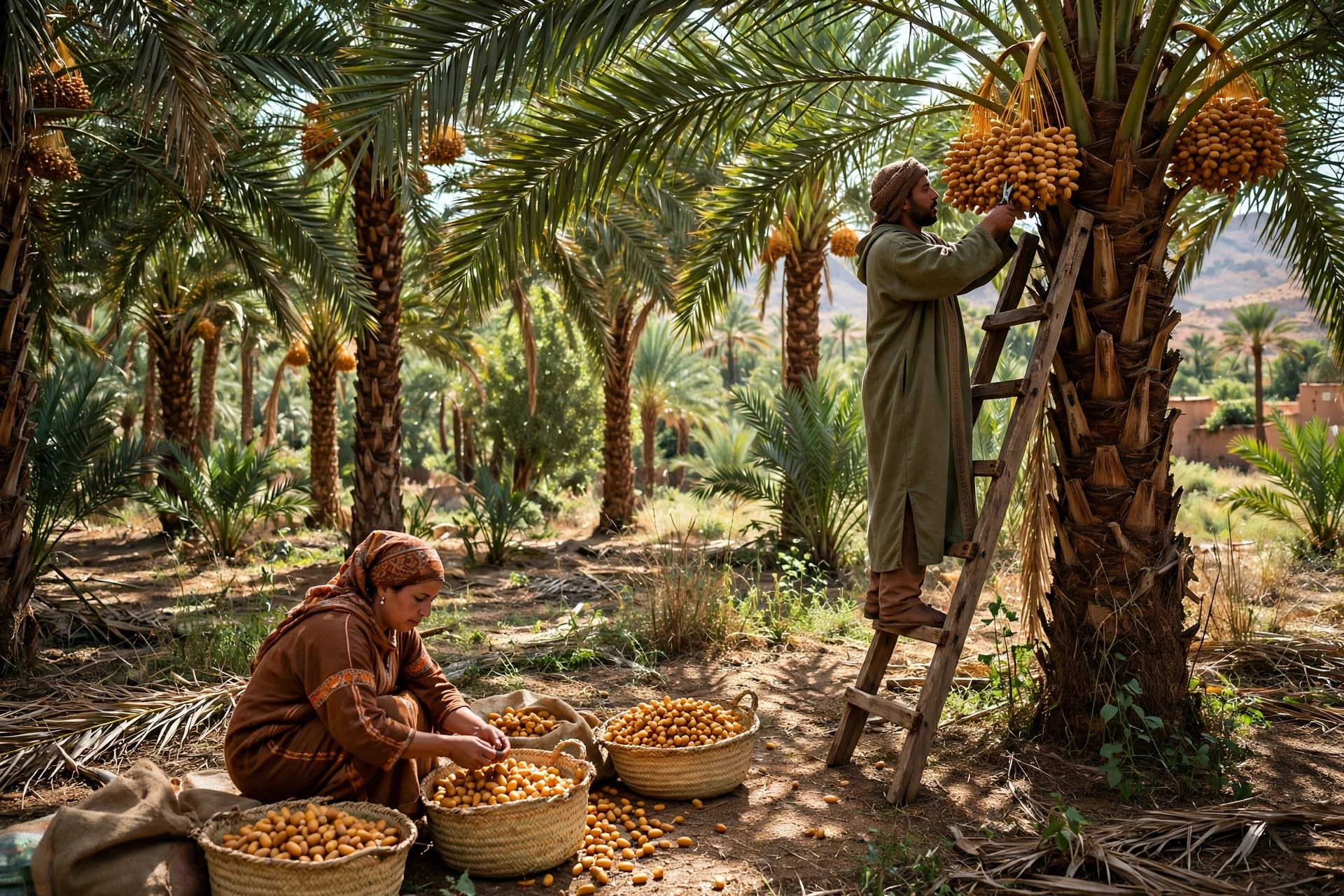
What makes the grove possible is water. Underground channels known as khettara or foggara carry spring water by gravity to the gardens, while open channels called seguias distribute it across the plots. Water is divided among households in time shares. This figuig travel guide recommends a slow morning walk in the grove with someone local. In October and November the date harvest fills it with activity, and dates bought direct from growers cost around 30–50 MAD per kilo (about $3–5, November 2026).
Ksar Architecture and Covered Lanes
Figuig's architecture is vernacular earthen building at its most complete. Houses of rammed earth and mud brick rise two or three storeys, clustered tight for shade and defence, with high walls and carved wooden doors. The lanes between them are often covered, creating a cool permanent twilight.
This is defensive architecture with a social purpose. The covered lanes shade pedestrians, the thick walls insulate against heat and cold, and the maze-like plan once slowed raiders. Treat the ksour as a neighbourhood, not a museum: greet people, ask before photographing residents, and keep your voice down. That respect is the best advice in this figuig travel guide.
Hammams and Hot Springs
Figuig is known for its natural hot springs, and the traditional hammam remains a lively social hub for residents. The neighbourhood hammam in the old quarter sees almost no tourists. A visit costs around 15–20 MAD (about $1.50–2, November 2026, planning range).
The best-known spring is Hammam Sidi Slimane, whose warm water feeds the traditional baths. Ask your host which hammam is open and when the men's and women's hours fall. Bring your own towel and soap. For many visitors the hammam is the most memorable hour of the trip, and this figuig travel guide rates it the town's most authentic experience. Bathe respectfully, and leave your camera in your bag.
How to Get to Figuig
There is no easy way to reach Figuig. No train serves the town, and the nearest station and airport are both in Oujda, about 370 kilometres north. This figuig travel guide recommends allowing a full day for the trip in each direction.
| Route | Distance | Time | Notes |
|---|---|---|---|
| Oujda – Figuig (N17) | About 370–385 km | 5–6 hours by car | Via Tendrara, Bouarfa |
| Oujda – Figuig by bus | About 370–385 km | About 6 hours | CTM; 150–200 MAD (about $15–20) |
| Errachidia – Figuig | About 404 km | 6–7 hours | Via the N10 to Bouarfa |
| Fes – Figuig by bus | About 600–650 km | 17–20 hours | Via Errachidia; 300–350 MAD (about $30–35) |
By car, the N17 from Oujda is the standard route: surfaced throughout, quiet, and fine for an ordinary two-wheel-drive car. Our driving in Morocco guide covers rental rules, fuel and road etiquette. By bus, CTM runs the route in about six hours; confirm the day before. For a wider desert journey, see our Sahara desert guide to Merzouga and Zagora.
Where to Stay in Figuig
Accommodation in Figuig is limited, and that is part of its charm: a handful of family guesthouses, one or two small hotels in the newer part of town, and little else. Book in advance, especially for October.
Family guesthouses are the best option, at roughly 150–280 MAD per night (about $15–28), often with a home-cooked dinner included. Your host can arrange a local guide. Small hotels in the new town cost roughly 250–400 MAD per night (about $25–40) and offer private bathrooms but less character. A local guide costs roughly 200–300 MAD per day (about $20–30). Expect simple rooms and home cooking.
What to Eat in Figuig
Figuig's food is oasis cooking: dates, lamb, vegetables from the grove gardens, and bread baked in clay ovens. The signature dish is date tagine, lamb slow-cooked with Figuig dates and almonds, sweeter than the tagines of the coast. Your guesthouse is the best place to eat it.
Medjool and Boufeggous dates are harvested in October and November, and buying direct from growers costs around 30–50 MAD per kilo (about $3–5, November 2026). Beyond dates, expect harira, couscous on Fridays, grilled meats, mint tea, and bread with olive oil and amlou. Restaurants are few, so eat at your guesthouse most nights. No figuig travel guide would send you here for fine dining; come for the home cooking instead.
Best Time to Visit Figuig
Figuig has a hot desert climate, with scorching summers and cold, clear winters. The sweet spots are October–November, when the date harvest fills the town with life, and February–April, with warm days and cold nights. Summer is genuinely punishing: temperatures regularly pass 40°C, with peaks near 48°C reported.
This figuig travel guide's pick is October: daytime highs around 22–27°C, nights around 10–16°C, and the whole town working the harvest. February to April, around 18–27°C by day, is the second-best window. For a fuller picture, see our guide to the best time to visit Morocco. Carry water, a hat and sunscreen even on mild days.
A Suggested Two-Day Figuig Travel Guide Itinerary
Two full days is the minimum for Figuig, and three is better. This figuig travel guide itinerary assumes you arrive by late afternoon on day one.
On day one, arrive, settle in, and climb to a viewpoint above the ksour for sunset. The panorama from the terraces above Zenaga takes in the whole oasis at once. Eat dinner with your host family.
On day two, start at dawn in the palm grove, walking the shaded paths while the light filters green through the fronds. Spend the late morning wandering the ksour with a local guide. After lunch, visit the hammam, then spend the afternoon in the grove or on the rooftops. If you have a third day, walk slowly to the edge of the oasis and back.
Day Trips and the Road Beyond
Figuig itself is the destination, and there is deliberately little around it: the border closes off the east, and the desert takes care of the rest. The best excursion is the road north towards Bouarfa, through dry plateaus, black stony hills and small oasis settlements such as Ich, where palms cluster along a watercourse. Bouarfa, about 117 kilometres north, is the natural stop on the way to Errachidia.
For a longer journey, Figuig pairs naturally with Oujda and the Sahara dunes. Our Morocco road trip guide covers remote routes, and our Morocco Sahara camping guide is useful if you continue south to the dunes. Do not plan to cross into Algeria from Figuig: the border is closed, and there is no crossing for foreign travellers. This figuig travel guide is blunt on that point because travellers still ask.
Practical Tips for the Border Zone
Figuig sits in a sensitive border area. Carry your passport or ID at all times, and expect checkpoints on the road from Oujda: they are routine and quick if your papers are in order. No reliable source confirms that visitors need a special permit to visit Figuig itself. Do not approach the border fence.
Cash is essential: bring enough Moroccan dirhams for your whole stay. ATMs in the town cannot be relied on, and card payment is rare. Fill your tank in Bouarfa; signal fades quickly on the open road. For general safety advice, see our guide on whether Morocco is safe for travellers. That is the kind of practical advice this figuig travel guide exists to give.
How Much Does a Figuig Trip Cost?
Figuig is one of the cheapest places to travel in Morocco. The main costs are transport and your guesthouse. All prices are planning ranges checked in November 2026; confirm them on arrival.
| Daily budget level | Accommodation | Food | Transport and activities | Total per day |
|---|---|---|---|---|
| Budget | 150–280 MAD (guesthouse) | 60–100 MAD | 50–100 MAD | About 260–480 MAD ($26–48) |
| Mid-range | 250–400 MAD (small hotel) | 100–180 MAD | 200–300 MAD (guide, taxi) | About 550–880 MAD ($55–88) |
| With a driver | 250–400 MAD | 100–180 MAD | Driver, 800–1,200 MAD/day | About 1,150–1,780 MAD ($115–178) |
A two-night stay from Oujda, travelling by bus and sleeping in a guesthouse, can be done for roughly 1,200–2,000 MAD (about $120–200). Travelling by bus and hiring a local guide on arrival is the cheapest comfortable way to do it, and this figuig travel guide recommends exactly that for most visitors.
Frequently Asked Questions
Is Figuig worth visiting?
Yes, if you like remote places and slow travel: seven ksour, around 200,000 date palms, an ancient water system and almost no other tourists, which is why this figuig travel guide exists. Skip it as a day trip: Oujda is five to six hours away.
How do I get to Figuig from Oujda?
Drive the N17 south through Aïn Beni Mathar, Tendrara and Bouarfa, about 370–385 kilometres and five to six hours. CTM and local buses cover the same route in about six hours for roughly 150–200 MAD ($15–20).
Can I cross the border into Algeria from Figuig?
No. The Morocco–Algeria land border has been closed since 1994, and there is no crossing for foreign travellers at Figuig. Beni Ounif is only a few kilometres away but unreachable by road.
When is the best time to visit Figuig?
October–November is the best time, when the date harvest fills the town with life and temperatures are mild. February–April is also good. Avoid June–August, when daytime temperatures regularly pass 40°C.
Where should I stay in Figuig?
A family guesthouse is the best choice, at roughly 150–280 MAD per night (about $15–28), often with dinner included. Book ahead, especially in October.
Is Figuig safe for travellers?
Figuig is a quiet, conservative small town, and visitors report a warm welcome. The main cautions are practical: the remote location, the desert heat, the closed border and the limited services. Carry ID, bring cash, and dress modestly.
Conclusion
Figuig is Morocco at its most remote and most rewarding: seven mud-brick ksour, a palm grove of some 200,000 trees, water that has flowed for centuries, and a border that keeps the modern world away. It asks a lot, a full day on the road each way, and repays it with a place entirely itself. Go slowly, stay two nights or more, and hire a local guide. This figuig travel guide will have done its job if you arrive expecting little and leave planning to come back. See our About page and seven-day Morocco itinerary.