
A morocco in 30 days itinerary is the longest version of our north-to-south route, and the only one that ends with a day out on the Atlantic instead of a day in the city.
This morocco in 30 days itinerary follows the 29-day route exactly for its first twenty-nine days, from Tangier down through Chefchaouen, Fes, the Sahara and Marrakech to the Atlantic coast, and it keeps the two slow farewell days in Casablanca. Then it adds one more day: a slow return to El Jadida, the old Portuguese fortress town south of Casablanca, for the cistern, the ramparts and a long seafood lunch by the sea.
If you are planning your first long trip to the country, start with our Morocco Travel Guide for First-Time Visitors before you read on. It covers visas, money, transport and safety in one place, so this guide can stay focused on the route itself. A morocco in 30 days itinerary is a big commitment, and it rewards travellers who arrive with the practical questions already answered.
One honest note before the route itself: thirty days will not show you all of Morocco, and it should not try. The far south, the Draa Valley and the Rif coast beyond Chefchaouen are left for another trip, and that is a deliberate choice. A morocco in 30 days itinerary goes deep on one great arc, from the Strait of Gibraltar to the Atlantic south of Casablanca, instead of skimming the whole map. Depth is the point.
In this guide
- Why a Morocco in 30 Days Itinerary Is the Sweet Spot
- Morocco in 30 Days Itinerary at a Glance
- Days 1–29: The Route So Far
- Day 30: A Slow Return to El Jadida on a Morocco in 30 Days Itinerary
- What Changes on a Morocco in 30 Days Itinerary
- How to Get Around on a Morocco in 30 Days Itinerary
- What a Morocco in 30 Days Itinerary Costs in 2026
- Where to Stay on a Morocco in 30 Days Itinerary
- Practical Tips for Thirty Days in Morocco
- Frequently Asked Questions
- Conclusion: Is Thirty Days Enough for Morocco?
Why a Morocco in 30 Days Itinerary Is the Sweet Spot
Twenty-nine days already ends well, with two slow days in Casablanca after the pottery days in Safi. The extra day fixes the one thing left undone in that ending: the coast south of Casablanca is visited in passing, on day trips squeezed between other plans, and never given a full, unhurried day of its own. A morocco in 30 days itinerary gives El Jadida that day, and the trip ends on the sea rather than in traffic.
The pace is the other reason this route works. Two nights in Chefchaouen, Fes, the Atlas and Essaouira, three in the desert and Marrakech, two full days among the potters of Safi, and two slow days in Casablanca to finish. Nothing on this route is a one-night stop except the desert camp nights and the Dades Valley, and every long drive is followed by at least one day with nowhere to be.
Thirty days is also the point where the trip stops feeling like a holiday and starts feeling like a season of your life. You will know the rhythm of the call to prayer, the price of a mint tea, and which taxi drivers to wave past. That familiarity is the real luxury of a month in Morocco, and it is worth more than any single sight.
Morocco in 30 Days Itinerary at a Glance
| Day | Place |
|---|---|
| 1 | Tangier |
| 2 | Chefchaouen |
| 3 | Chefchaouen |
| 4 | Meknes |
| 5 | Fes |
| 6 | Fes |
| 7 | Merzouga |
| 8 | Merzouga |
| 9 | Merzouga |
| 10 | Dades |
| 11 | Marrakech |
| 12 | Marrakech |
| 13 | Marrakech |
| 14 | Imlil |
| 15 | Imlil |
| 16 | Essaouira |
| 17 | Essaouira |
| 18 | Rabat |
| 19 | Casablanca |
| 20 | Casablanca |
| 21 | El Jadida |
| 22 | Oualidia |
| 23 | Sidi Bouzid |
| 24 | Azemmour |
| 25 | Oualidia |
| 26 | Safi |
| 27 | Safi |
| 28 | Casablanca |
| 29 | Casablanca |
| 30 | El Jadida (return day trip from Casablanca) |
Days 1–29: The Route So Far
Days 1 to 29 of this route are identical to our Morocco in 29 Days itinerary, with the same cities, the same order and the same key facts and prices. Start in Tangier, on the Strait of Gibraltar, then spend two nights in blue Chefchaouen, with a hike to Akchour on the second day. From there the route runs through Meknes and Volubilis to two nights in Fes, where the tanneries and the Marinid Tombs anchor the stay.
The middle of the trip crosses the Middle Atlas to three nights in Merzouga, deep in the Erg Chebbi dunes, then the Dades Valley and three nights in Marrakech. Two nights in the High Atlas village of Imlil follow, then two nights in Essaouira, the Atlantic wind city, where grilled sardines at the harbour cost 40–70 MAD ($4–7).
The final stretch runs up the coast: Rabat and its Oudaya Kasbah, then Casablanca, where the Hassan II Mosque tour costs 140 MAD ($14) for a foreign adult, checked in November 2026.
Day 21 is a first, faster visit to El Jadida by train, Day 22 is the Oualidia lagoon, Day 23 is a beach day at Sidi Bouzid, Day 24 is Azemmour on the Oum Er-Rbia, Day 25 is a slow overnight back in Oualidia, and Days 26 and 27 are two days among the potters of Safi. Days 28 and 29 are the two slow farewell days in Casablanca: the mosque and the Corniche, then Anfa Park, the Old Medina and a farewell dinner at Rick’s Café. By this point you will have crossed the country twice, north to south and back up the coast, and the route will feel familiar rather than foreign. A morocco in 30 days itinerary keeps all of that untouched, and only then adds its final day.
Day 30: A Slow Return to El Jadida on a Morocco in 30 Days Itinerary
Day 30 is the only new day on this route, and it is deliberately a return, not a new destination. You have already passed through El Jadida on Day 21, by train, for a quick look at the cistern and the ramparts. Today you go back by car, slowly, with the whole day to give the town. Leave Casablanca after a late breakfast and drive south on the motorway: about 100 km, roughly an hour and a quarter at the wheel, with a toll of 31–35 MAD ($3–$3.50) depending on the exit, checked in November 2026. Trains also run from Casa Voyageurs to El Jadida in about an hour and a half, if you would rather not drive.
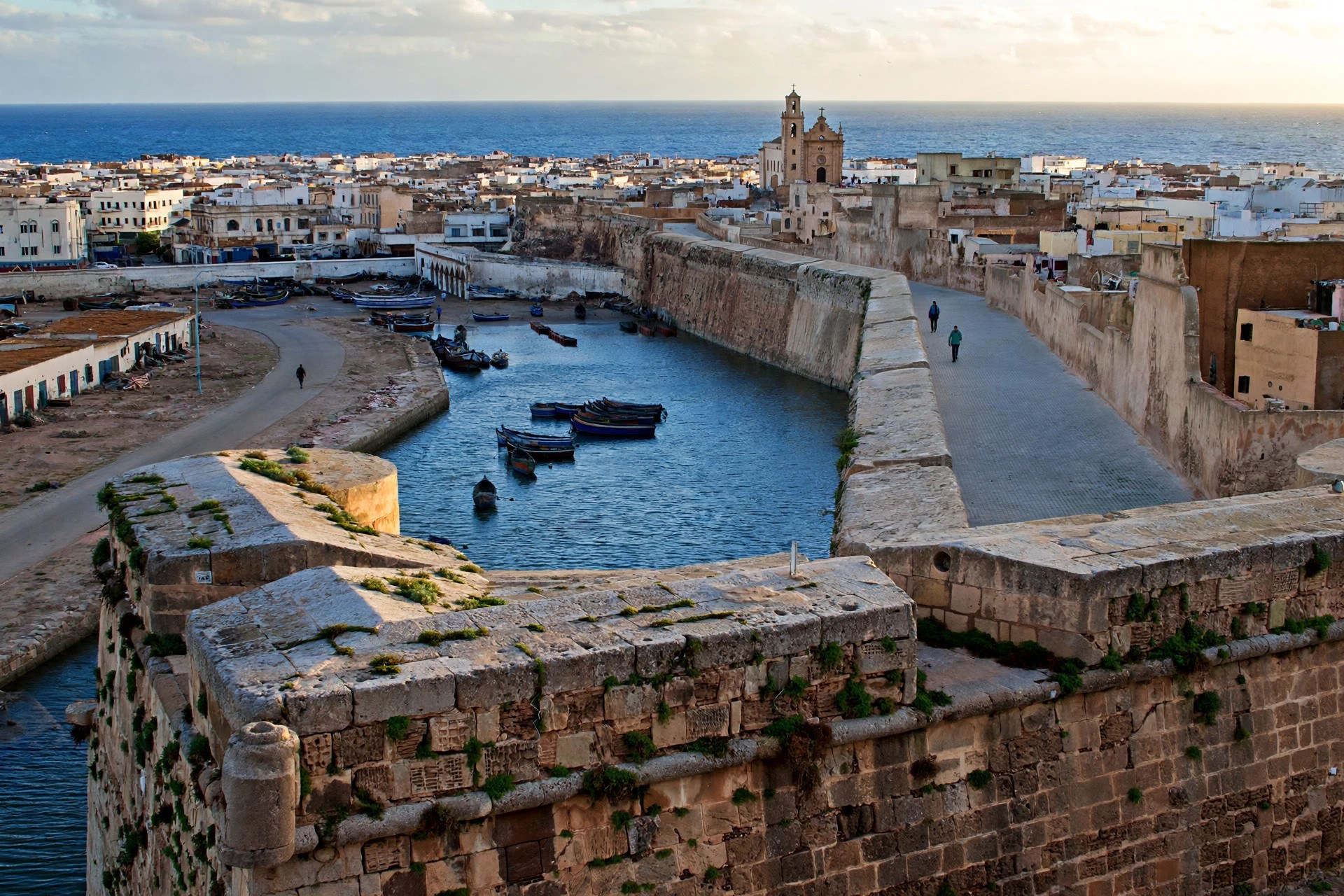
El Jadida is the old Portuguese port of Mazagan, a fortified town the Portuguese built from 1502 and held until 1769, when Sultan Sidi Mohammed ben Abdallah retook it and renamed it El Jadida, meaning “the new”. UNESCO inscribed the Portuguese City of Mazagan on the World Heritage List in 2004, as an outstanding example of the exchange between European and Moroccan cultures. The old walled quarter is small, a tight grid of lanes inside thick sea walls, and it is still a living neighbourhood, not a museum.
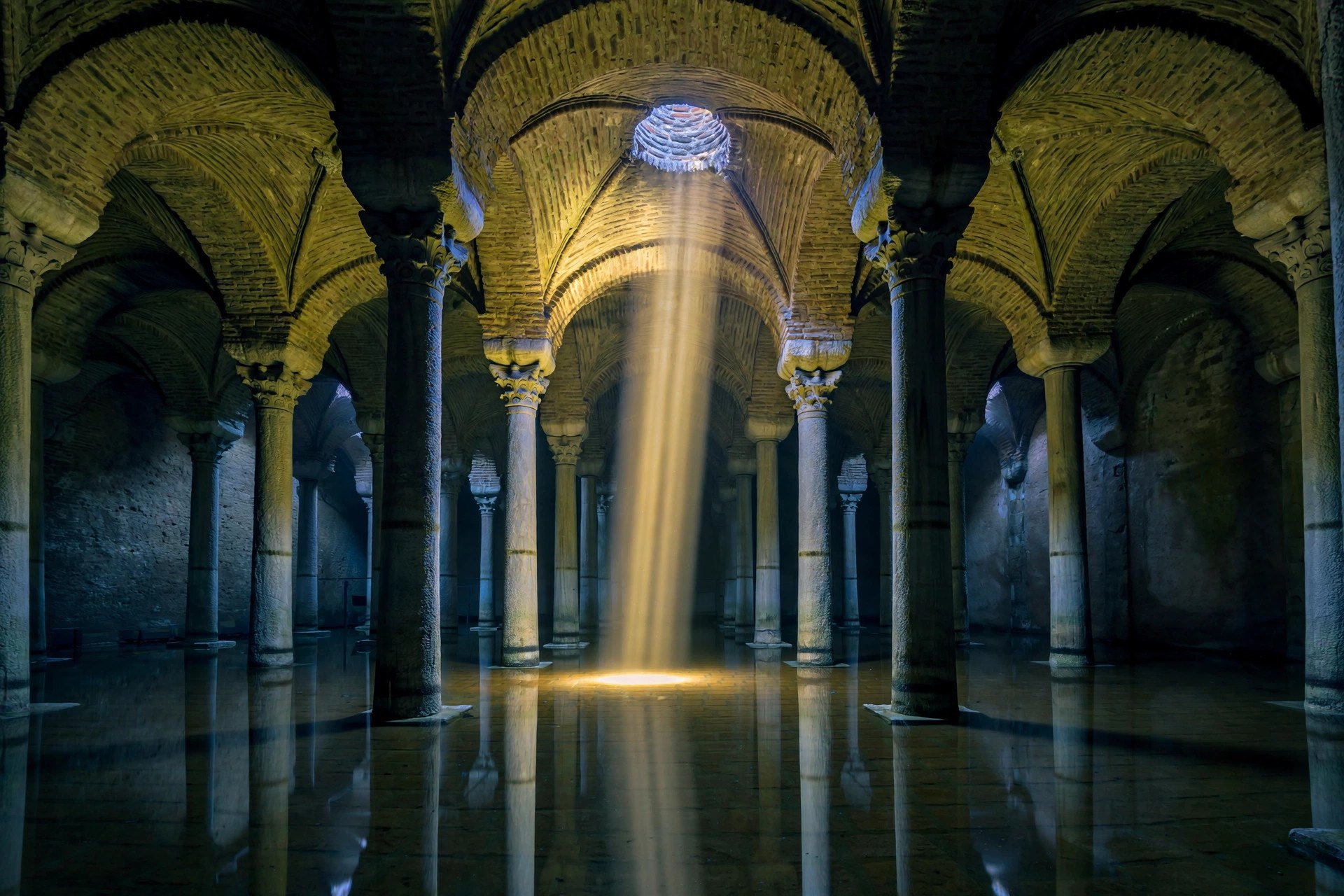
Start at the Portuguese Cistern, the underground hall that gives this day its highlight. Built around 1514 as an armoury and converted to a cistern in 1541, when the fortress needed its own water supply to survive a siege, it is a vaulted chamber of twenty-five stone columns standing in a thin sheet of water. A single round opening in the ceiling drops a shaft of daylight onto the water, and the columns double in the reflection. Go early, before the tour groups arrive, and give yourself half an hour in the cool dark. Reported entry fees vary widely between sources, from 10 to 60 MAD ($1–$6), so check on arrival rather than trusting any single figure.
From the cistern, walk the ramparts, the town’s great free attraction. The loop is flat and easy, about thirty to forty-five minutes at a relaxed pace, with the Atlantic on one side and the old town on the other. Look for the Church of the Assumption, the surviving Portuguese church inside the walls, and the sea gate where the fortifications meet the ocean. The fishing port below the walls is busiest in the morning, when the boats unload sardines and sole, and it is worth a slow wander before lunch.
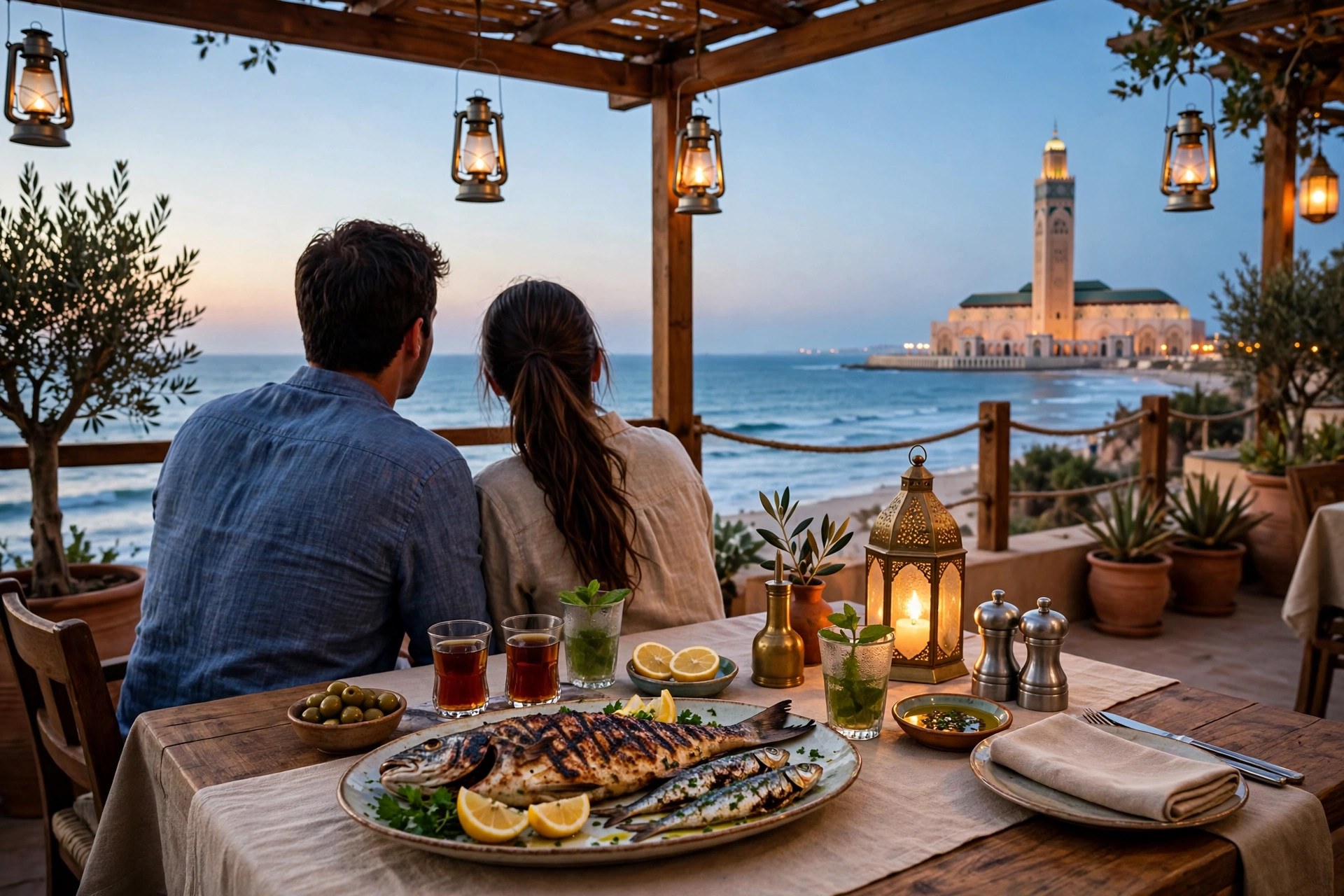
Lunch is the long meal this day is built around. El Jadida is a fishing town, and the restaurants near the port and the beach serve grilled sardines, sole and fish tagine for roughly 100–180 MAD ($10–$18) per person, a typical range to confirm on arrival. Order slowly, stay for mint tea, and let the afternoon stretch.
On a morocco in 30 days itinerary, this is the last long lunch of the trip, so treat it like one: no timetable, no next stop, just the sea and the plate in front of you. After lunch, walk Deauville Beach, the long sandy city beach north of the old town, or drive a few kilometres south to Sidi Bouzid, where the sand is quieter and the cafés face the surf. If the wind is up, the waves at Sidi Bouzid are a show in themselves, and the point break draws local surfers even in winter.
Drive back to Casablanca in the late afternoon, in time for a last walk on the Corniche as the light goes. The road north is the same motorway you came down, and by now it will feel like a road you know. A morocco in 30 days itinerary ends the way it began, on the Atlantic, and that symmetry is worth noticing as the coast slides past the window. Sleep in Casablanca. Mohammed V airport sits about 30 km south of the centre, 35 to 45 minutes by car, or about 35 minutes on the airport train, roughly 50 MAD ($5), checked in November 2026. A grand taxi runs roughly 250–300 MAD ($25–30), a typical range to confirm on arrival. Your flight leaves tomorrow morning, on Day 31, and nothing about this last day is allowed to hurry it.
What Changes on a Morocco in 30 Days Itinerary
Only one thing changes against our Morocco in 29 Days route. The 29-day route ends with two slow farewell days in Casablanca and a flight the next morning. A morocco in 30 days itinerary keeps every other day identical — the same cities, the same order, the same hotels and prices — and adds a thirtieth day: a slow return to El Jadida for the Portuguese Cistern, the ramparts, a long seafood lunch and the beach, returning to Casablanca for the final night. Day 30 is the only change on a morocco in 30 days itinerary, and departure is the morning of Day 31.
How to Get Around on a Morocco in 30 Days Itinerary
The simplest way to run a morocco in 30 days itinerary is with a private driver, roughly 600–900 MAD ($60–90) a day including fuel. ONCF runs the Al Boraq high-speed train from Tangier to Casablanca, and ordinary trains cover Rabat, Casablanca and El Jadida. Oualidia has no train station: reach it by car. Renting a car costs 250–450 MAD ($25–45) a day, and the coastal motorway from Casablanca to El Jadida is an easy, well-kept drive. For Day 30 itself, a driver for the day or a rental car both work; the train is the cheaper option if you are happy to take a petit taxi from El Jadida station, about 2 km from the old town, to the walls.
What a Morocco in 30 Days Itinerary Costs in 2026
A mid-range budget for one person, checked November 2026. All prices are in dirhams with dollar equivalents at roughly 10 MAD to $1, and should be checked on arrival.
| Item | Daily | Total | USD |
|---|---|---|---|
| Riad/hotel | 500–800 | 15,000–24,000 | $1,500–2,400 |
| Food, drink | 200–350 | 6,000–10,500 | $600–1,050 |
| Driver or rental | 400–700 | 12,000–21,000 | $1,200–2,100 |
| Entries, activities | 100–200 | 3,000–6,000 | $300–600 |
| Desert camp | — | 1,800–3,600 | $180–360 |
| Transport, tips | 50–100 | 1,500–3,000 | $150–300 |
| SIM, laundry | — | 400–800 | $40–80 |
| Total | 1,250–2,150 | 39,700–68,900 | $3,970–$6,890 |
Where to Stay on a Morocco in 30 Days Itinerary
Stay in riads, and book the first three nights and the desert camp in advance. A morocco in 30 days itinerary rewards the same rule as the shorter routes: one base per stop, no packing every morning.
| Nights | City | Nightly price |
|---|---|---|
| 1 | Tangier | 450–700 MAD ($45–70) |
| 2–3 | Chefchaouen | 350–600 MAD ($35–60) |
| 4 | Meknes | 400–650 MAD ($40–65) |
| 5–6 | Fes | 500–800 MAD ($50–80) |
| 7–9 | Merzouga | 600–1,200 MAD ($60–120) |
| 10 | Dades | 350–600 MAD ($35–60) |
| 11–13 | Marrakech | 500–850 MAD ($50–85) |
| 14–15 | Imlil | 350–600 MAD ($35–60) |
| 16–17 | Essaouira | 450–750 MAD ($45–75) |
| 18 | Rabat | 500–800 MAD ($50–80) |
| 19–20 | Casablanca | 500–850 MAD ($50–85) |
| 21 | El Jadida | 400–700 MAD ($40–70) |
| 22 | Oualidia | 400–700 MAD ($40–70) |
| 23 | Sidi Bouzid | 350–600 MAD ($35–60) |
| 24 | Azemmour | 350–600 MAD ($35–60) |
| 25 | Oualidia | 400–700 MAD ($40–70) |
| 26–27 | Safi | 350–650 MAD ($35–65) |
| 28–30 | Casablanca | 500–850 MAD ($50–85) |
Night 30 in Casablanca is the last, and the only new night on this route.
Practical Tips for Thirty Days in Morocco
Pack for four climates, not one. The Rif and the Atlas are cool at night even in spring, the desert is cold before dawn and fierce by noon, and the Atlantic coast is windy all year. Layers beat bulk, and a light windproof jacket earns its place every single day on the coast. Laundry is cheap and easy in every city on this route, so a two-week bag is enough for a month.
Money is simple if you plan it once. ATMs are everywhere in the cities, and most riads and restaurants in Marrakech, Fes and Casablanca take cards, but the desert camp, the potters of Safi and the small cafés of the coast are cash-only. Carry a few hundred dirhams in small notes at all times, and keep the rest in your hotel safe. Tipping is small and constant: 10–20 MAD for a porter, a guide or a good meal, and a little more for a driver who has been with you for days.
Health and comfort need a little forethought on a trip this long. Drink bottled water everywhere, and carry rehydration salts for the desert days. The sun in the Sahara and the High Atlas is stronger than it looks, so sunscreen and a hat are not optional. If you take regular medicine, bring a full month’s supply plus a spare week, and keep it in your hand luggage on the way in.
Book the things that sell out, and leave the rest open. The desert camp, the first three riads and the Rick’s Café dinner should be booked before you fly. Everything else, from the El Jadida day trip to the pottery workshop in Safi, can be arranged a day or two ahead, and the freedom to change your mind is half the point of travelling slowly. Finally, learn ten words of Darija, the Moroccan Arabic of the street: hello, please, thank you, how much, and delicious. They cost nothing, and they open doors that money cannot. A morocco in 30 days itinerary gives you the time to use them properly, and the shopkeepers, drivers and potters you meet will notice the effort.
Frequently Asked Questions
Is a morocco in 30 days trip enough for Morocco?
Yes. It covers the imperial cities, the Sahara, the Atlas and the Atlantic coast, with slow days built in, and it ends with a full day in El Jadida rather than a rushed goodbye. If a month is too long, our Morocco in 29 Days itinerary is one day shorter, and the Morocco in 28 Days route is two days shorter.
How much does a morocco in 30 days trip cost?
A mid-range 30-day trip costs roughly 39,700–68,900 MAD ($3,970–$6,890) per person, including hotels, food, a driver or rental car, entries and the desert camp. The extra day over the 29-day route adds about 1,250–2,150 MAD ($125–$215), mostly one more night in Casablanca and the El Jadida day trip.
What is the best time of year for this trip?
Spring and autumn are best: warm days, cool nights and a Sahara you can actually enjoy. Summer is very hot in Marrakech and the desert, and winter is cold in the Atlas, so plan the desert and mountain days for the milder months if you can.
Do I need a car for this trip?
Not for the whole trip: trains cover Tangier, Rabat, Casablanca and El Jadida, and the Al Boraq high-speed line makes the north fast. But the desert, the lagoon, Safi and the coastal villages need a car, so most travellers hire a driver for the whole route or rent a car for the southern half.
Can I do this trip by public transport only?
Almost: buses and trains reach every city on this route, but the desert camp, the Oualidia lagoon and Souiria Kdima need a car or a booked transfer. A private driver for the Fes-to-Marrakech stretch and the coastal days solves the gaps without renting for the full month.
Is Morocco safe for this trip?
Yes. The real risks on a long trip are small ones: unmetered taxis, inflated souk prices and pickpockets in crowded medinas. Keep your passport and cards in your hotel safe, agree taxi fares before you get in, and walk with the same common sense you would use in any big city.
Conclusion: Is Thirty Days Enough for Morocco?
Thirty days is where Morocco stops being a highlights tour and starts being a journey. A morocco in 30 days itinerary gives you the Strait and the Atlantic, the blue city and the medieval medina, three nights among the dunes, Essaouira, Casablanca, El Jadida twice — once in passing, once slowly — Oualidia, Sidi Bouzid, Azemmour, two days in Safi, and two slow days in Casablanca at the end. Start with the Morocco Travel archive before you book, and let a morocco in 30 days itinerary be the trip you remember.
Last checked: November 2026.