If you are planning a trip to Morocco in February or March 2027, this ramadan in morocco travel guide is the one page to read first. Ramadan is the biggest month in the Moroccan year, and it changes how the whole country runs for about four weeks: the hours shops open, when restaurants serve food, how busy the roads are, and when the cities come alive. None of that is a reason to stay away — it is a reason to plan properly.
Here is the insider correction that shapes everything in this ramadan in morocco travel guide: the problem visitors face during Ramadan is not food. It is time. Outsiders worry about whether they will be allowed to eat during the day, and the honest answer is that eating is the easy part — hotels serve food and tourist restaurants stay open. What actually catches people out is the shifted schedule: banks close early, the medina goes quiet in the afternoon, and the whole country wakes up again at sunset.
This ramadan in morocco travel guide is written by a Moroccan, for first-time visitors and for people who have just moved here. It covers the expected dates for Ramadan 2027, what actually changes day to day, what ftour food costs, and how to behave without offending anyone. All prices are in Moroccan dirhams (MAD) with dollar equivalents at roughly 10 MAD to 1 USD, checked November 2026.
- Ramadan in Morocco Travel Guide: The 2027 Dates (Projected, Not Confirmed)
- What Ramadan Actually Is — and What It Is Not
- What Changes During Ramadan: The Practical Table
- Eating, Drinking and Ftour Food
- Ramadan Nights: The Real Festival
- Getting Around: Transport, Taxis and Trains
- Money, Shopping and Ramadan Costs
- Etiquette, Dress, Alcohol — and Life as a New Resident
- Frequently Asked Questions
- The Honest Verdict
Ramadan in Morocco Travel Guide: The 2027 Dates (Projected, Not Confirmed)
Ramadan 2027 in Morocco is expected to begin around Monday 8 February 2027 and end around 8–9 March 2027, with Eid al-Fitr around 9–10 March 2027. Some sources say 7 February. None of these dates is official yet, and this ramadan in morocco travel guide will not pretend otherwise: Morocco confirms the exact dates only by moon sighting. The Ministry of Habous and Islamic Affairs announces the start on the evening of 29 Shaaban — the evening of 7 February 2027 — and if the moon is not seen, Ramadan starts a day later. Eid is confirmed the same way.
That one-day uncertainty matters, which is why this ramadan in morocco travel guide stresses it. Do not book a non-refundable desert tour for the morning of 8 February and then discover the month actually began on the 7th. Treat 7–11 March 2027 as a flexible window too, when transport is busiest and many small businesses close.
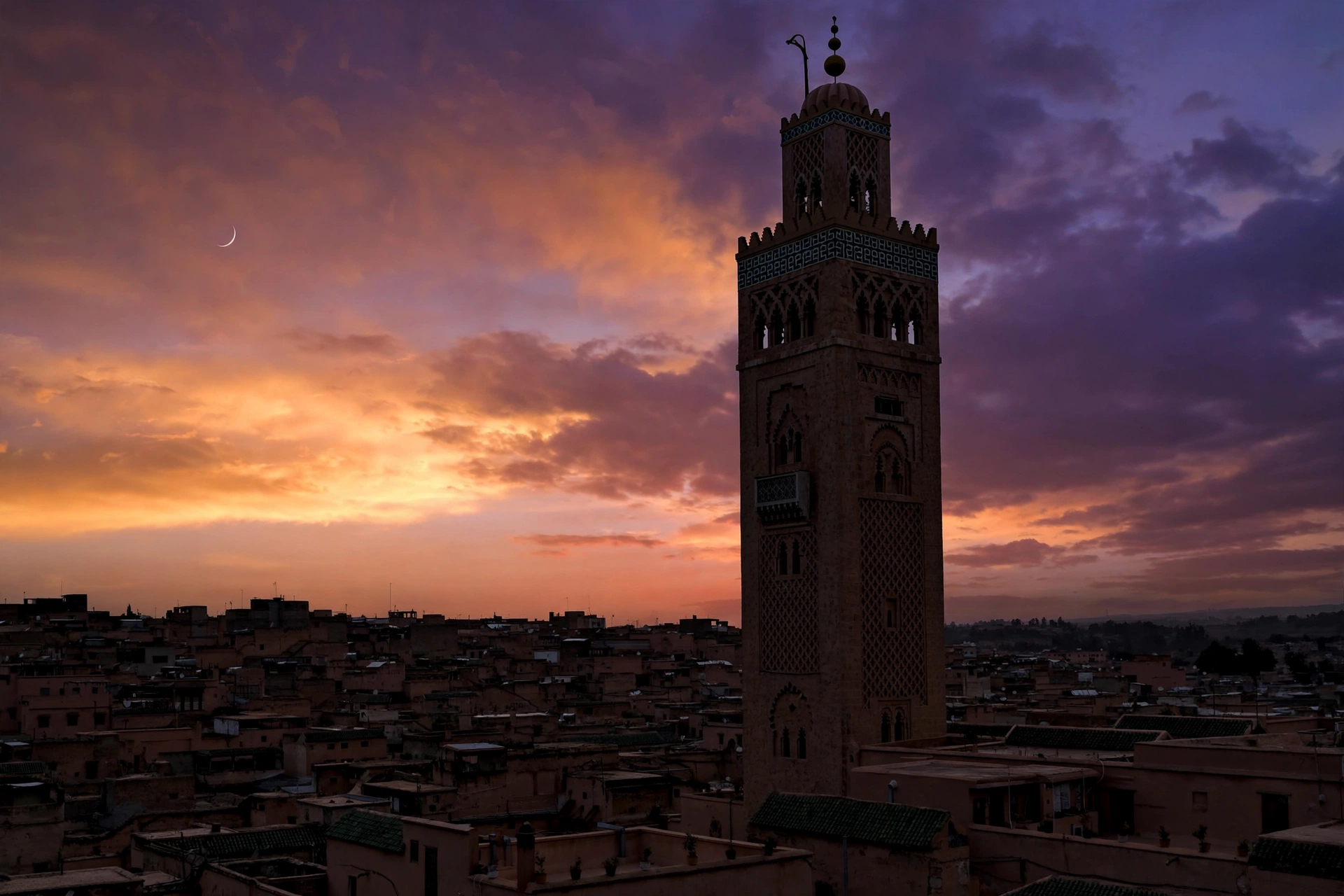
One change from previous years: Morocco has been on GMT all year since 20 September 2026, when Decree 2.26.530 repealed the old rule, so the old Ramadan-specific clock change no longer applies. Sunset falls around 6:30–7 p.m. February is low season, as our best time to visit Morocco guide explains.
What Ramadan Actually Is — and What It Is Not
Ramadan is the ninth month of the Islamic lunar calendar, and for Moroccan Muslims it is a month of fasting, prayer, family and charity. From dawn until sunset, observant Muslims do not eat or drink — not even water. The fast is broken at sunset with ftour, the evening meal, and many people eat a second, lighter meal called suhoor before dawn. Mosques fill for taraweeh, the long evening prayers. The background is well explained on Wikipedia’s page on Ramadan.
What Ramadan is not, for a visitor, is a shutdown — and that is the point this ramadan in morocco travel guide keeps coming back to. Morocco does not close. The country runs on a different timetable for a month: offices open later and close earlier, schools run shortened days, and heavy labour slows in the afternoon. But trains run, hotels operate, and the medinas become the liveliest places in the country after dark. Ramadan is a religious month first and a tourist season second, so behave like a guest in someone else’s holy month.
What Changes During Ramadan: The Practical Table
This is the table most of this ramadan in morocco travel guide comes down to — save it on your phone.
| What | Normal month | During Ramadan |
|---|---|---|
| Restaurants and cafés | Open all day | Many close or shorten daytime hours; hotel and tourist restaurants in big cities usually stay open |
| Banks | Roughly 8:30 a.m.–4:30 p.m. | Shorter hours, often 9 a.m.–2 or 3 p.m.; expect queues in the morning |
| Government offices | Full working day | Reduced hours, often 9 a.m.–3 p.m. |
| Museums and historic sites | Standard hours | Often open later in the morning and close earlier; some stay open late in the evening |
| Souks and medina shops | Busy all day | Quiet in the afternoon, packed from ftour until late at night |
| Petit taxis | Normal | Scarce and busy just before ftour; drivers hurry home to break the fast |
| Grand taxis and buses | Normal | Run, but afternoon services can be thin; book intercity travel in the morning |
| Alcohol | Sold in licensed hotels, bars and some supermarkets | Not sold in many places during Ramadan; hotel bars for guests usually continue |
| Dress expectations | Modest dress is polite everywhere | Modesty matters more; cover shoulders and knees, especially outside tourist areas |
| Nightlife and streets | Quiet after midnight in most cities | Streets, cafés and squares stay busy until 1–2 a.m. |
Two rows deserve emphasis. The first is the hour before ftour: between about 5:30 and 7 p.m., everyone is trying to get home, taxis disappear, and the streets empty in minutes. Do not plan a journey in that window — wait it out in a café, your riad, or a restaurant that serves ftour. The second is the afternoon slump: from about 2 to 5 p.m., energy is low everywhere and service is slow. Sightsee in the morning, rest in the afternoon, and live your day in the evening.
Eating, Drinking and Ftour Food
Can you eat during the day in Ramadan? Yes. Non-Muslim visitors may eat and drink discreetly in private — in your hotel room or a restaurant that stays open. What is not acceptable is eating or drinking openly in public during fasting hours: walking through the medina with a sandwich, drinking water on a crowded street, smoking in front of people who are fasting. In a country where the fast is a shared public act, that is disrespectful and can be sensitive. The rule this ramadan in morocco travel guide would give a friend is simple: eat indoors, eat quietly, and do not make a display of it.
Hotel and tourist restaurants in the big cities — Marrakech, Casablanca, Fes, Rabat, Tangier, Agadir — usually stay open during the day. Riads serve breakfast to guests as normal. In smaller towns, daytime options shrink sharply, so carry water and snacks and eat them out of sight.
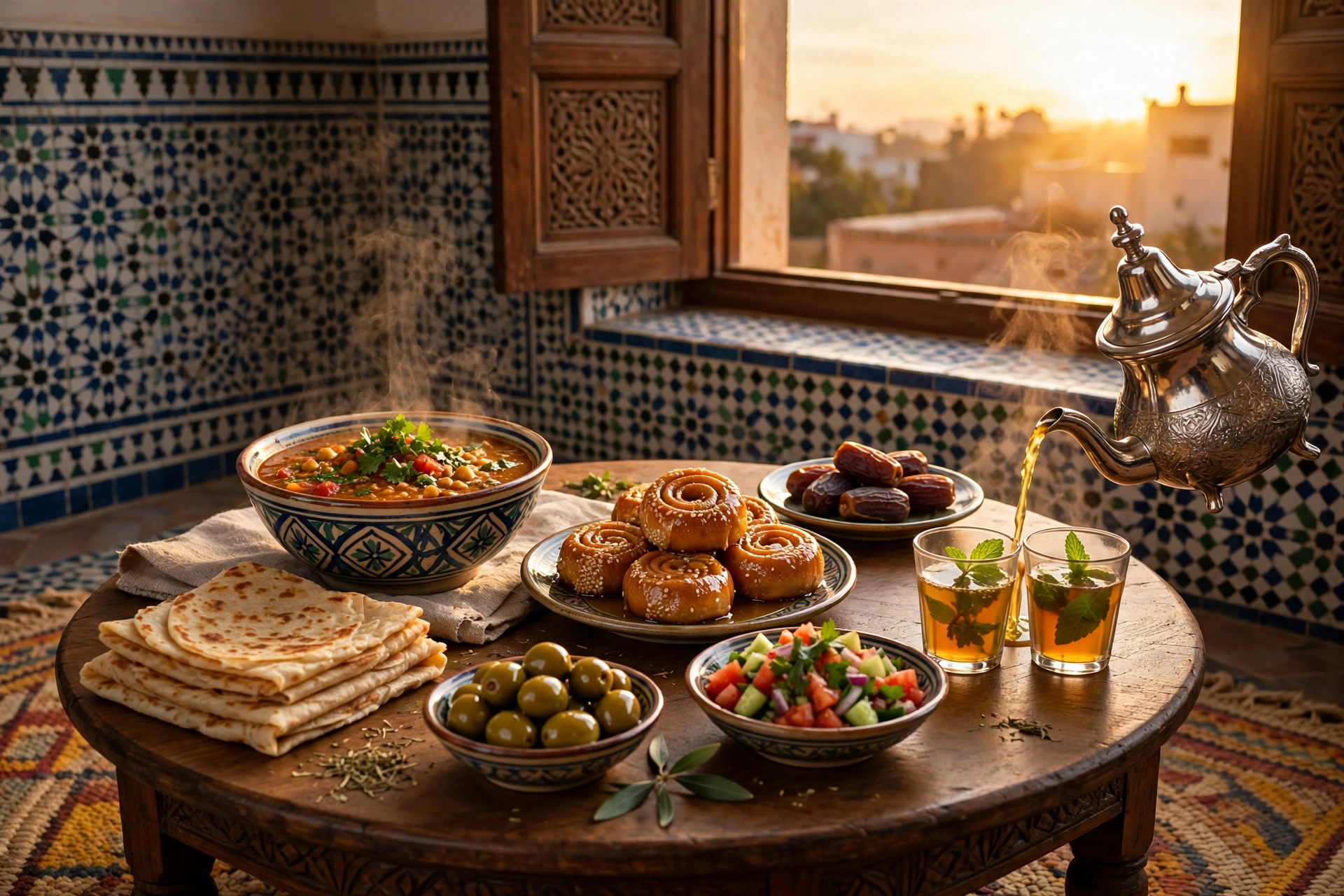
Ftour is the meal to plan your evenings around. The fast is traditionally broken with dates and water or milk, then harira — the tomato, lentil and chickpea soup that is the backbone of the month — served with chebakia, the honey-soaked cookies, and msemen, the flaky flatbread, plus boiled eggs, olives and mint tea.
A bowl of harira costs 10–20 MAD ($1–$2) at a stall, checked November 2026, and a restaurant ftour set menu runs 80–200 MAD ($8–$20), checked November 2026. Reserve a day ahead in Marrakech and Fes. Our Moroccan food guide goes deep on harira, chebakia and msemen.
Ramadan Nights: The Real Festival
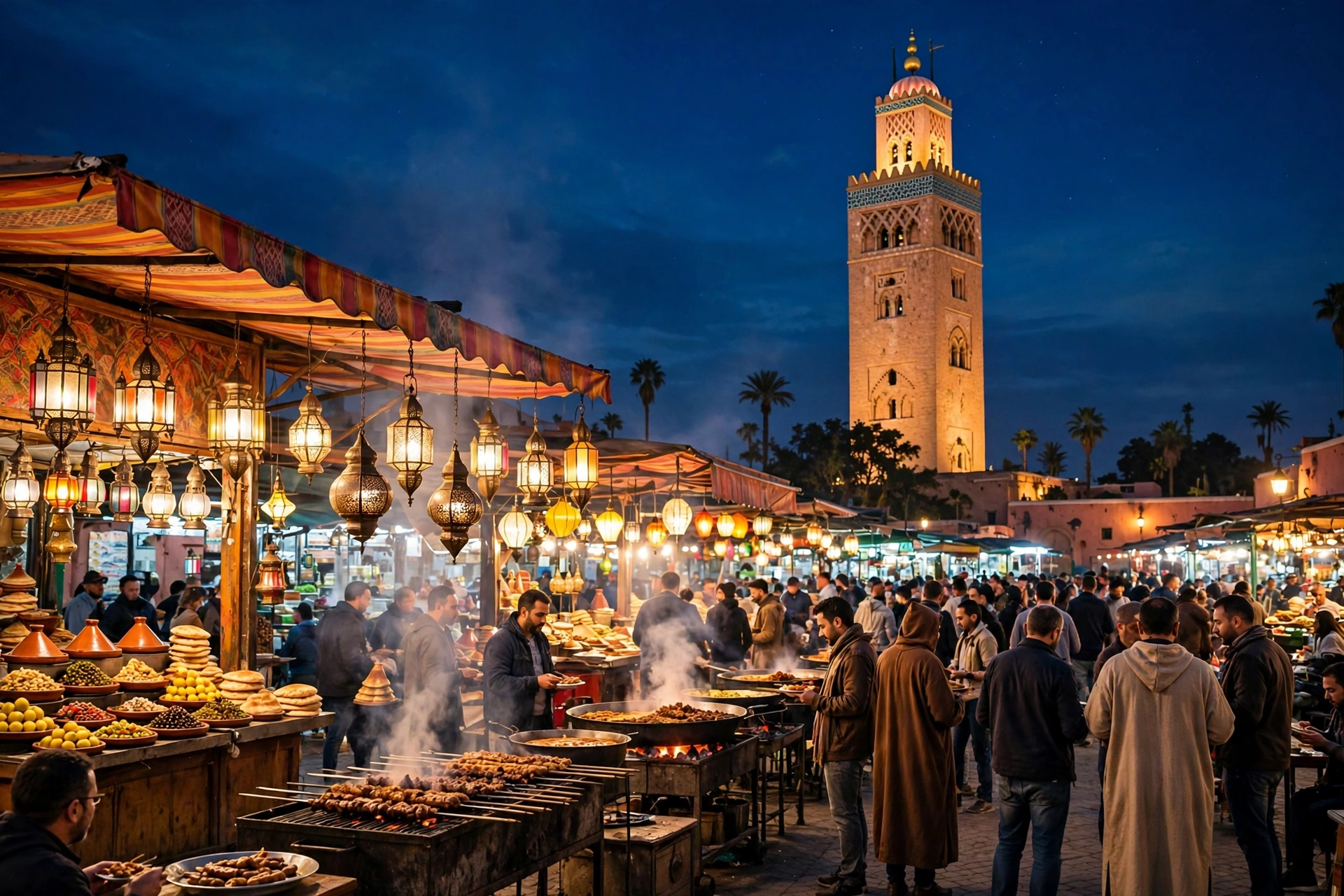
If the days of Ramadan belong to patience, the nights belong to celebration, and this is the part of the month that most travel writing gets wrong. The guides that tell you Ramadan is a bad time to visit have usually only seen the daytime. They have not stood in Jemaa el-Fna at 10 p.m. in Ramadan, when the square is fuller, louder and happier than at any other time of year. That is the honest core of this ramadan in morocco travel guide.
After ftour, Morocco wakes up. Families come out with children, cafés fill, and the medinas light up — strings of lights across the alleys, lanterns in shop windows, pastry stalls doing their best trade. Food stalls in Jemaa el-Fna run at full strength, and in Fes the medina stays crowded past midnight.
The practical advice follows from that, and it is the advice this ramadan in morocco travel guide gives every visitor: sightsee from 9 a.m. to 1 p.m., rest from 2 to 5 p.m., eat ftour somewhere good at sunset, then go out and stay up.
Getting Around: Transport, Taxis and Trains
Transport runs through Ramadan, but it runs on Ramadan’s timetable, and the timetable has two pinch points: the hour before ftour and the Eid travel rush. Trains are the most reliable option — ONCF services run to their normal schedules. Book intercity trains in the morning, as this ramadan in morocco travel guide advises, and buy tickets in advance around Eid, when services sell out.
Petit taxis are the daily frustration. They are plentiful in the morning, thin in the afternoon, and almost impossible to find in the thirty minutes before ftour, when every driver is racing home to eat with his family. If you must travel at that hour, order a taxi through your hotel or a ride-hailing app well in advance. Grand taxis between towns run, but afternoon departures can be cancelled if there are not enough passengers, so travel before noon.
Do not drive in the ftour hour, when the roads fill with hurried drivers — plan long drives for the morning and be parked by 5 p.m. Walking is the best transport in the medinas at night, when the streets are crowded, lit and safe-feeling.
Money, Shopping and Ramadan Costs
Ramadan is not an expensive month to visit, and for a careful traveller it is one of the cheapest. February is low season, and riad rates are at their lowest. This ramadan in morocco travel guide prices the month honestly, because a budget built on guesses is worse than no budget at all.
Food prices move first. Dates rise before Ramadan and stay high through the month: good Medjool dates run 60–120 MAD ($6–$12) a kilo in the souks, checked November 2026. Harira stays cheap — the 10–20 MAD bowl barely moves, because it is the people’s soup.
Shopping follows its own Ramadan rhythm: the souks are quiet in the afternoon and frantic after ftour, and the last week before Eid is the biggest shopping week of the year. Prices do not drop for Ramadan, and hard bargaining works less well than usual. Our haggling in Morocco guide explains the fair prices for the usual souvenirs — and that food, pharmacies and fixed-price cooperatives are never haggled over, Ramadan or not.
Cash matters more than usual, because the food stalls, pastry sellers and night markets are cash-only, so withdraw in the morning, as this ramadan in morocco travel guide recommends. Our Morocco money and dirham guide covers ATMs, cards and tipping. For the longer view, our cost of living in Morocco pillar breaks down monthly budgets by city, checked November 2026.
Etiquette, Dress, Alcohol — and Life as a New Resident
Etiquette during Ramadan is mostly common sense, and it is the same common sense that applies all year, turned up slightly. Dress modestly: cover shoulders and knees, and women should carry a scarf for mosque visits, though non-Muslims do not enter mosques during prayer in any case.
Do not play loud music in the street during the day, and do not smoke in public during fasting hours. If you are invited to ftour by a Moroccan family or a colleague, accept: it is one of the warmest invitations in the culture, and bringing dates or pastries as a gift is exactly right. Arrive on time — ftour waits for the sunset call to prayer, not for late guests.
Alcohol deserves a direct answer because guides are vague about it. Alcohol is not sold in many places during Ramadan: liquor stores and supermarket alcohol sections often close for the month, and many restaurants stop serving wine. Hotel bars that serve resident guests usually continue. Do not bring alcohol into a family home, do not drink in public, and do not expect a bar scene. If a drink matters to you, check with your hotel before you book.
For new residents, Ramadan is the month when the practical side of living here shows itself. Government offices run reduced hours, so do any paperwork in the first week of the month or wait until after Eid. Schools run shortened days and children come home early and hungry. Workplaces expect reduced afternoon productivity and most employers adjust hours formally; if you work remotely, match the local rhythm — work early, rest in the afternoon, and take calls in the evening. For official travel advice, check the UK Foreign Office advice for Morocco.
Frequently Asked Questions
When is Ramadan 2027 in Morocco?
Ramadan 2027 in Morocco is expected to begin around Monday 8 February 2027 and end around 8–9 March 2027, with Eid al-Fitr around 9–10 March 2027. These are projections, not official dates: Morocco confirms the start by moon sighting, announced by the Ministry of Habous and Islamic Affairs on the evening of 7 February 2027. Some sources say 7 February. Plan with a day of flexibility on either side, as this ramadan in morocco travel guide recommends.
Is it a good time to visit Morocco during Ramadan?
Yes — if you plan around the nights, which is the advice this ramadan in morocco travel guide gives above everything else. Days are slower and some restaurants close at lunchtime, but prices are low, crowds are thin, and the cities are at their most festive after sunset.
Can tourists eat and drink during the day in Ramadan?
Yes, discreetly and in private, as this ramadan in morocco travel guide explains above: hotel restaurants, tourist restaurants and your own room. Eating or drinking openly in public during fasting hours is disrespectful. In small towns, daytime options are limited, so carry water and snacks and consume them out of sight.
What is ftour, and what does it cost?
Ftour is the meal that breaks the fast at sunset: dates, harira soup, chebakia, msemen, eggs and mint tea. A bowl of harira costs 10–20 MAD ($1–$2) at a stall; a restaurant ftour set menu runs 80–200 MAD ($8–$20), checked November 2026. Many restaurants offer a special ftour menu only during Ramadan — reserve a day ahead in Marrakech and Fes, as this ramadan in morocco travel guide recommends.
Is alcohol available during Ramadan in Morocco?
Alcohol is not sold in many places during Ramadan: liquor stores and supermarket alcohol sections often close for the month. Hotel bars serving resident guests usually continue, as this ramadan in morocco travel guide notes. Do not drink in public and do not bring alcohol into a family home.
Do the clocks change for Ramadan in Morocco?
No, not any more. Morocco has been on GMT all year since 20 September 2026, when Decree 2.26.530 repealed the old rule, so the old Ramadan-specific clock change no longer applies. Sunset in February and early March falls around 6:30–7 p.m. — a change this ramadan in morocco travel guide flags because so many older guides still get it wrong.
The Honest Verdict
So should you come to Morocco during Ramadan? If you want Morocco at its most convenient, no — come in April or October, when everything runs on normal hours and every restaurant is open at lunch. But if you want Morocco at its most Moroccan, come in Ramadan, with the advice in this ramadan in morocco travel guide in your pocket. It is a rhythm to join: slow mornings, a quiet afternoon, ftour at sunset, and a city that stays up late.
Plan around the nights, eat ftour like a local, respect the fast in public, and Ramadan will give you the trip the ordinary months cannot. That is the honest verdict of this ramadan in morocco travel guide.